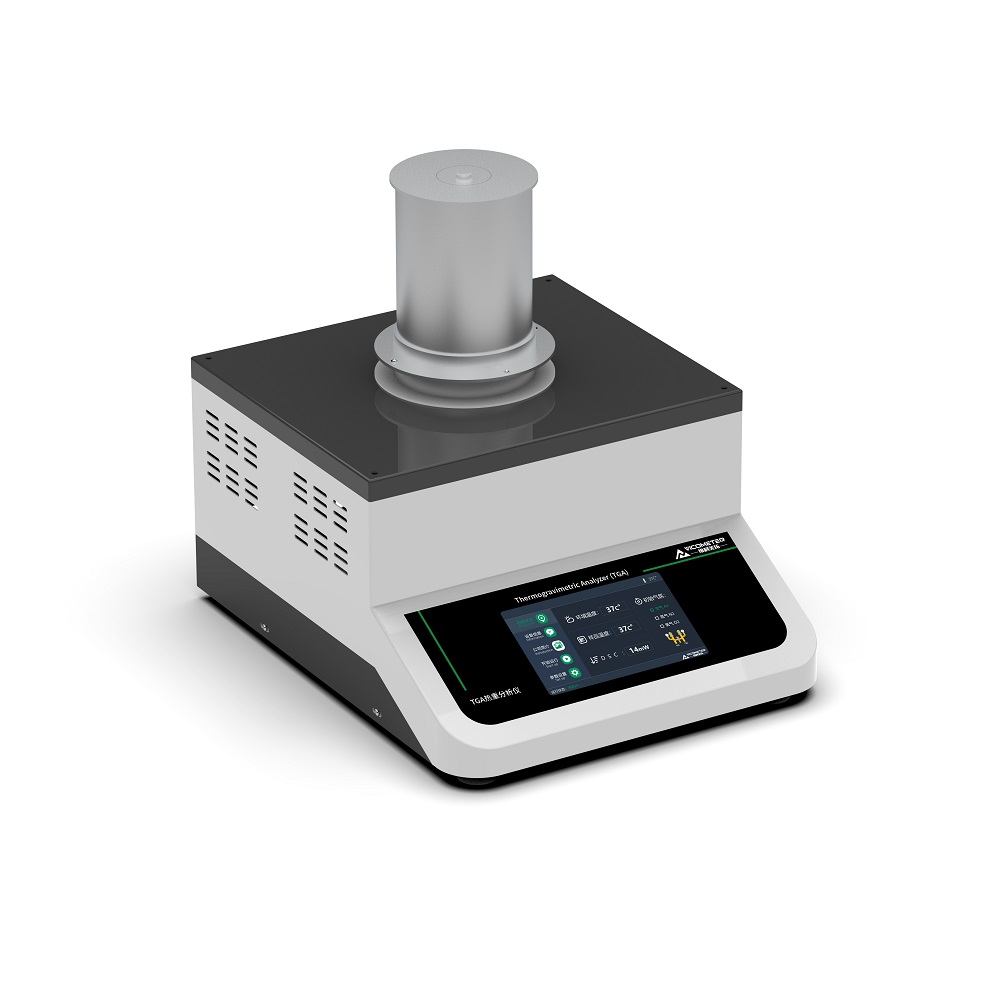
DSC Differential Scanning Calorimeter
A DSC differential scanning calorimeter is an instrument that uses thermal analysis technology to analyze the relationship between temperature and heat flow associated with thermal transitions inside materials. It can measure a variety of thermodynamic and kinetic parameters, such as oxidation induction time, glass transition temperature, melting point, melting, enthalpy change, phase transition, cold crystallization, crystallization, product stability, degree of cure, degree of crosslinking, specific heat capacity, heat of reaction, reaction rate, and sample purity.
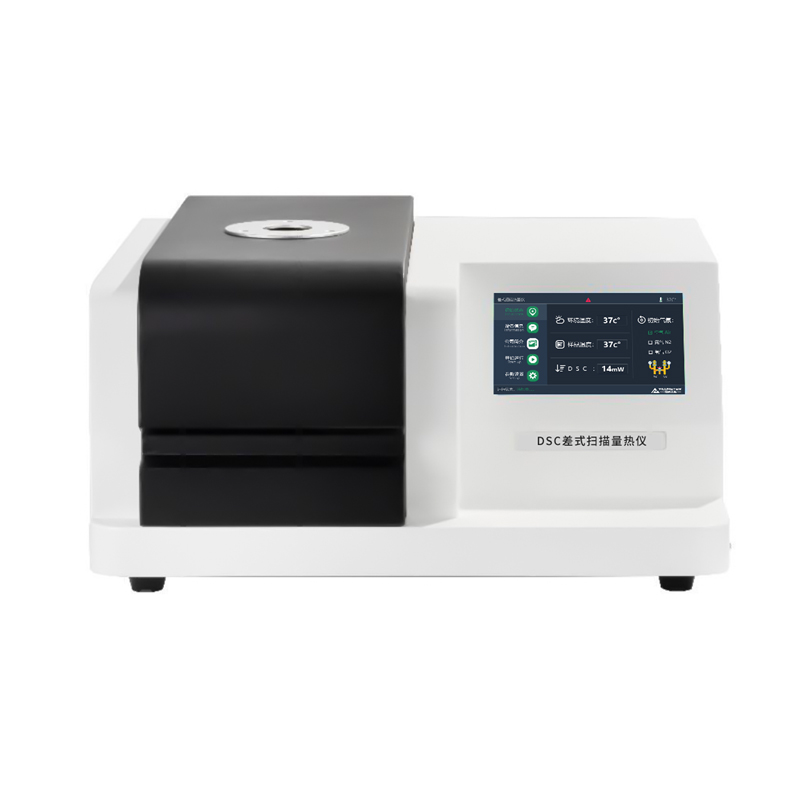
DSC Differential Scanning Calorimeter
(Click image to enlarge)
A Differential Scanning Calorimeter (DSC) is an instrument that uses thermal analysis to analyze the relationship between temperature and heat flow associated with thermal transitions within materials; it is also called a DSC analyzer or differential scanning calorimeter.
A DSC differential scanning calorimeter can measure a variety of thermodynamic and kinetic parameters, such as oxidation induction time, glass transition temperature, melting point, melting, enthalpy change, phase transitions, cold crystallization, crystallization, product stability, degree of curing, degree of crosslinking, specific heat capacity, heat of reaction, reaction rate, and sample purity.
Applications of differential scanning calorimeters: curing reaction temperature and thermal effects of polymer materials; measurement of phase transition temperatures and their thermal effects; measurement of crystallization and melting temperatures of polymers and their thermal effects; glass transition temperatures of polymers, etc.
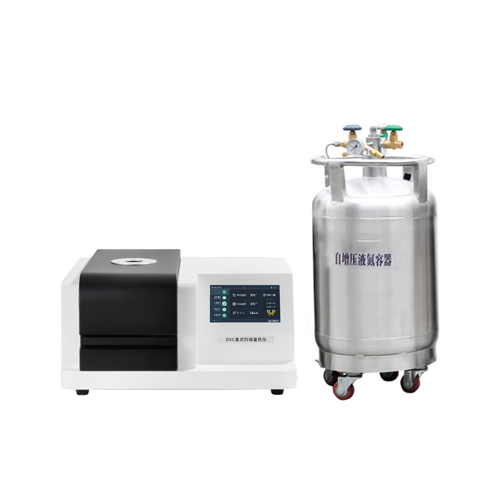
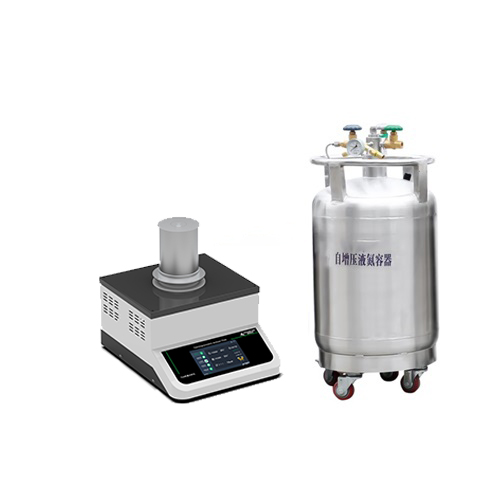
WKT-RC600YL DSC Differential Scanning Calorimeter Liquid Nitrogen Cooling
Differential scanning calorimetry (DSC) is a thermal analysis technique that measures, under a controlled temperature program, the difference in power (in the form of heat) delivered to a sample and a reference as a function of temperature. The curve recorded by a differential scanning calorimeter is called a DSC curve; it plots the rate of heat absorption or release by the sample—heat flow dH/dt (in mJ/s)—against temperature T or time t. DSC can determine numerous thermodynamic and kinetic parameters, such as specific heat capacity, heat of reaction, heat of transition, phase diagrams, reaction rate, crystallization rate, polymer crystallinity and sample purity.
Differential scanning calorimetry covers a wide temperature range, commonly 0-600°C. As its applications expand, low-temperature and high-temperature DSC instruments have emerged, reaching as low as -170°C and as high as 1050°C; high-temperature models up to 1400°C can be customized for special fields. In addition to the wide temperature range, DSC offers high resolution and requires only a small sample amount for precise analysis. It is suitable for inorganic substances, organic compounds, and pharmaceutical analysis.
In recent years, the use of thermal analysis for drug purity determination has been reported abroad, and the United States Pharmacopeia has included this analytical method for drug purity determination, indicating good prospects for the method. Below are some applications of DSC in pharmaceutical analysis.
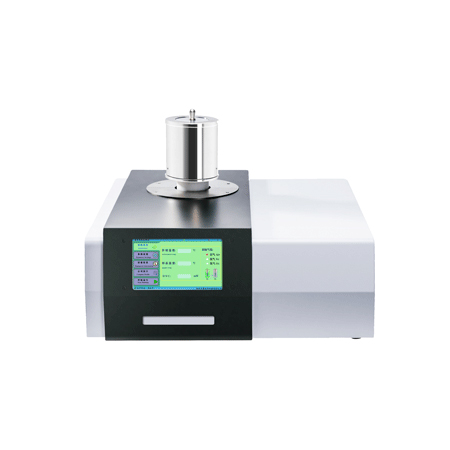
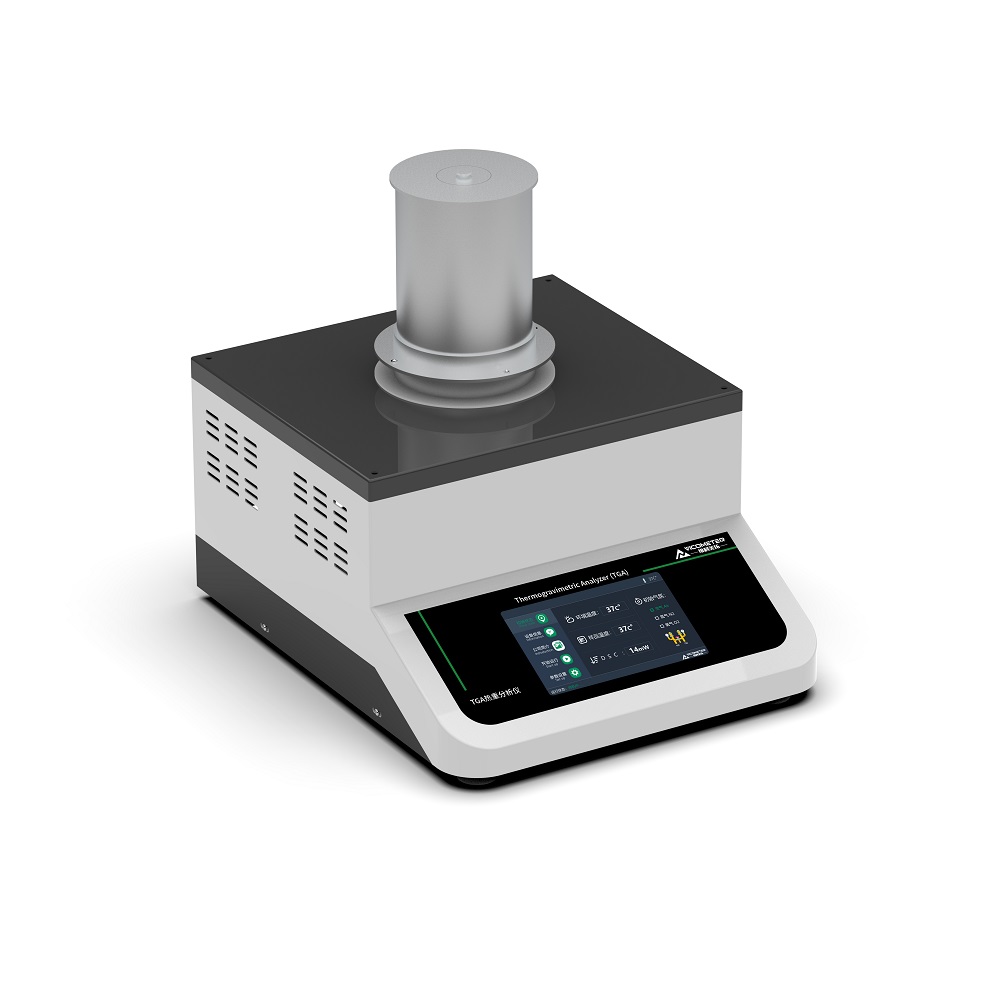
WKT-RC1050 High-Temperature DSC Differential Scanning Calorimeter (Customizable to 1400°C)
Differential Scanning Calorimetry (DSC) is a technique that measures the difference in power input to a substance and a reference as a function of temperature under programmed temperature control.
DSC and DTA instruments are similar in construction, except that two sets of compensation heating wires are installed beneath the sample and reference containers. When a temperature difference ΔT arises between the sample and the reference due to thermal effects during heating, a differential thermal amplifier circuit and a differential heat compensation amplifier change the current flowing into the compensation heaters. When the sample absorbs heat, the compensation amplifier immediately increases the current on the sample side; conversely, when the sample releases heat, the current on the reference side increases, until heat balance is restored on both sides and ΔT disappears. In other words, the heat change of the sample during a thermal reaction is compensated by the timely input of electrical power, so what is actually recorded is the difference in thermal compensation power between the two heaters beneath the sample and reference as a function of time t. If the heating rate is constant, the recorded signal is the power difference as a function of temperature T.
DSC and DTA share the same principle, but DSC outperforms DTA: heat measurement is more accurate, and resolution and reproducibility are better, so DTA has been gradually replaced by DSC. DSC can be used to study biomembrane structure and function, protein and nucleic acid conformational changes, and more.
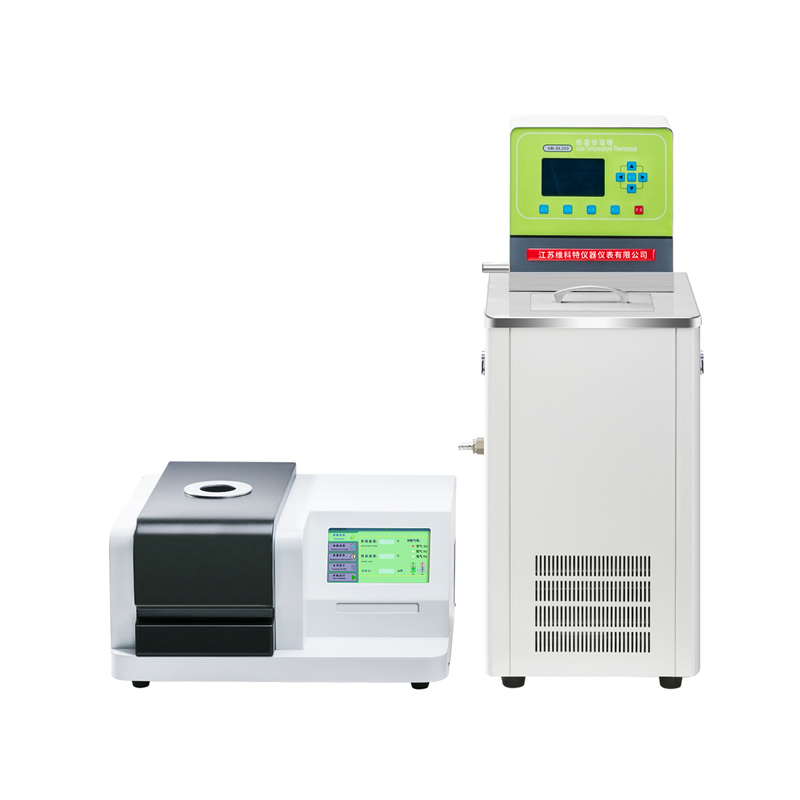
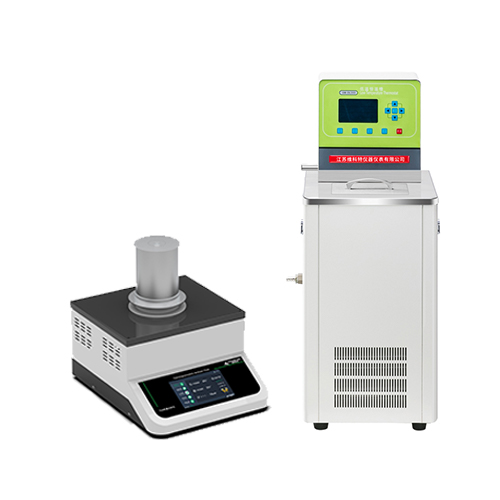
WKT-RC600L DSC Differential Scanning Calorimeter Semiconductor Cooling
The structural units of a differential scanning calorimeter generally include the heater, cooling device, heat-equalizing furnace chamber, atmosphere controller, heat flow sensor, furnace temperature sensor, and signal amplifier.
Heater: Heats the sample and reference ends; resistance heaters in various forms are generally used.
Cooling device: Cools the sample and reference ends; generally an external accessory used together with the instrument. Options include semiconductor cooling, air cooling, mechanical refrigeration, and liquid nitrogen cooling; the appropriate method is selected according to the required cooling rate and temperature range.
Heat-equalizing furnace chamber: Uses a metal with high thermal conductivity as the heat-equalizing block to ensure uniform temperature distribution on the inner surface of the chamber.
Atmosphere controller: Since samples may release corrosive or toxic gases during testing and may be oxidized by air at high temperatures, a protective atmosphere is needed to protect the sample and exhaust the generated gases. The atmosphere controller manages atmosphere flow control and channel switching.
Heat flow sensor: Quickly and accurately detects the heat flow difference between the sample and reference during the test.
Furnace temperature sensor: Detects the temperature of the heat-equalizing block and feeds this information back to the microprocessor for furnace temperature control.
Signal amplifier: Since heat flow signal changes are extremely small at the onset of a sample reaction, the heat flow sensor signal must be amplified for timely and accurate detection.
Related Products
Recently Viewed Products




Copyright © Jiangsu Victor Instrument Meter Co., Ltd. All rights reserved | Sitemap | Technical Support: VicoMeter Operations Center