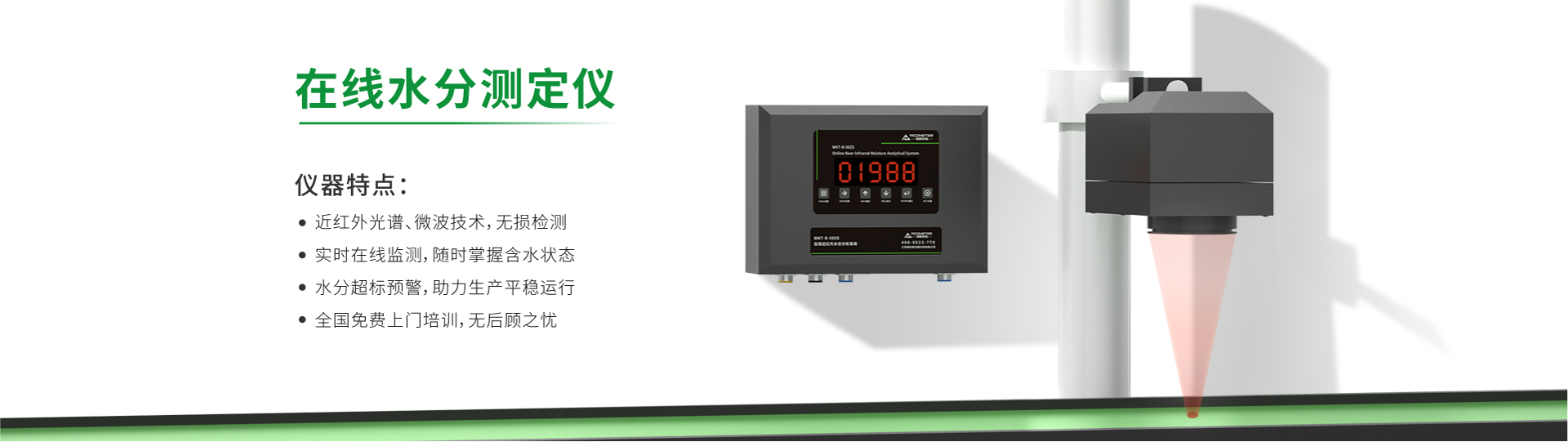
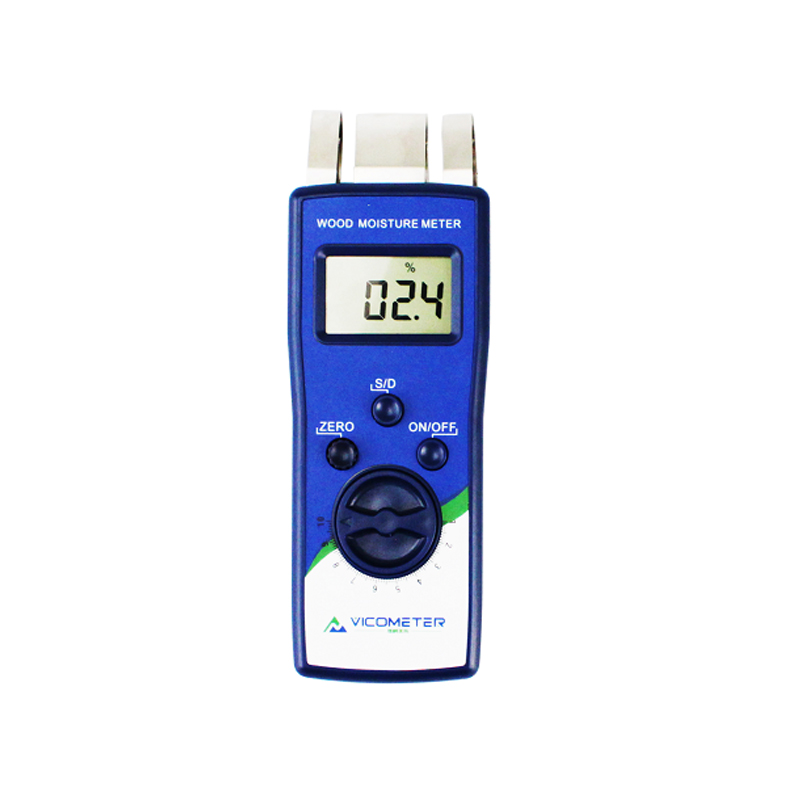
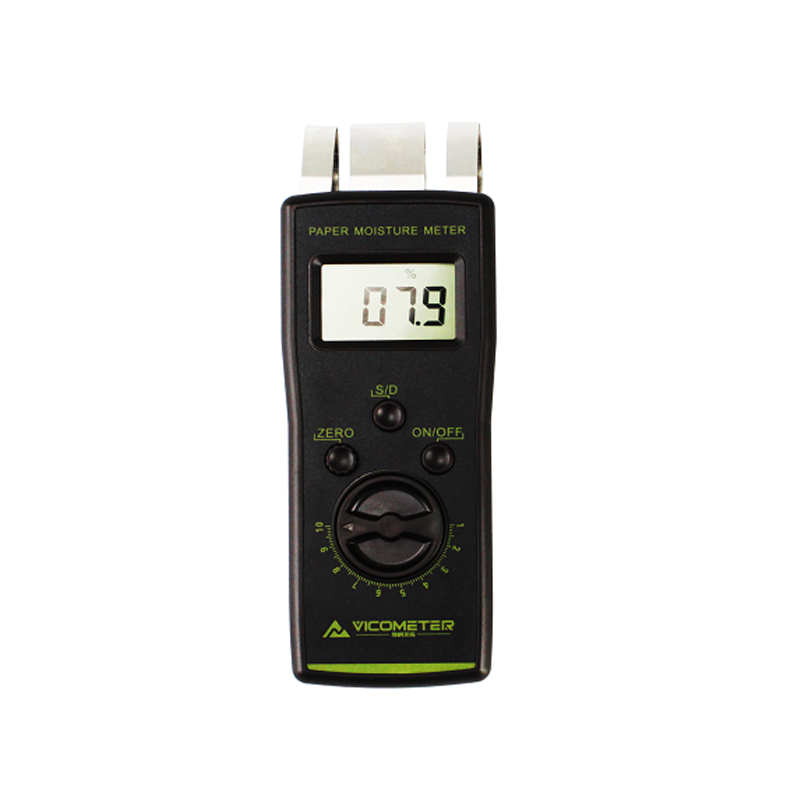
An online moisture analyzer is an instrument that continuously monitors and displays product moisture in real time during production, mainly including near-infrared (NIR) and microwave online moisture analyzers. As the technology develops, online moisture monitors are becoming increasingly intelligent, with features such as upper/lower limit alarms, data logging and uploading to user management platforms, supporting stable production and playing a vital role in enterprise production activities…Learn More About the Principle of Online Moisture Analyzers
Principle of Online Near-Infrared Moisture Analyzers
O-H bonds in water and C-H bonds in organics absorb NIR light at specific wavelengths; reflected energy is inversely proportional to absorbing molecules. The analyzer tracks NIR energy changes at a specific wavelength based on water's absorption.
Water molecules vibrate at specific energy bands—O-H bonds stretching, contracting, twisting. NIR bands are especially strong for water and easy to generate, filter, and detect; moisture-measuring wavelengths stay within 1-2.5 μm.
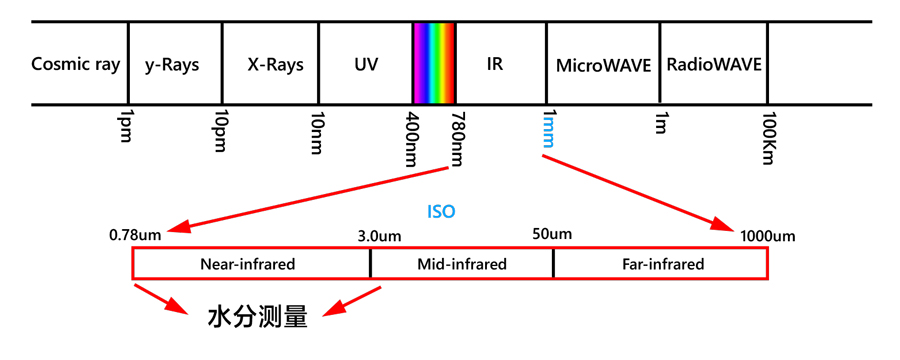
Absorption depends on water molecules encountered and absorption strength—proportional to moisture. As a reflectance method it is also affected by the material's reflectance and absorption; NIR measurement is non-destructive, non-contact, and real-time.
Working Principle of Online Near-Infrared Moisture Monitoring Systems
Multiple NIR beams focus onto the material surface; reflected beams are received by an advanced optical detection system with an embedded high-performance DSP chip for fast processing, storage, and display—outstanding accuracy and stability.
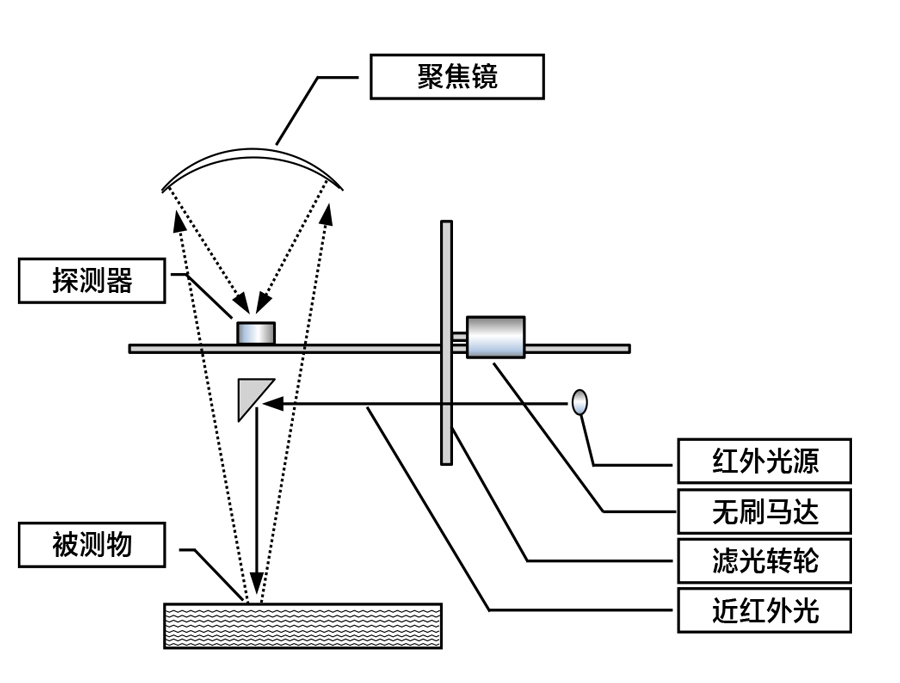
Many materials absorb infrared at specific wavelengths only; at least two are selected—a reference wavelength (not absorbed by material or water) and a measurement wavelength (absorbed by water only).
Precision filters on a rotating wheel pass reference and measurement pulses alternately onto the sample; the two timed pulses reflect to a detector as two signals. The reference shows expected reflection; the measurement is attenuated by water absorption. Combined into a ratio, differences from other moisture levels are proportional to moisture differences.
The signal strengths of the two channels combine into: R/M X M1/R1=ratio
Where: R--reference channel of the product beam
M--measurement channel of the product beam
M1--measurement channel of the compensation beam
R1--reference channel of the compensation beam
If drift occurs, M and M1 shift equally, canceling out in the ratio and preserving stability.
Principle of Online Microwave Moisture Analyzers
Microwave attenuation and phase shift depend on the medium's dielectric constant and loss tangent—far higher for polar water than ordinary media. Moisture is calculated from received attenuation and phase shift.
Microwaves penetrate fully, measuring all physical moisture—surface and internal—with high accuracy unaffected by color or structure. Applications span coal, sinter mixes, iron ore, chemicals, bauxite, nickel ore, sugar, tobacco, bagasse, grain, silicon, wood, wool, food, sand, polymers, cotton, and other non-conductives.
A Detailed Look at Online Microwave Moisture Analyzers
The probe measures 150-200 mm deep, analyzing total (core and surface) moisture; deep penetration means surface dirt does not matter.
The variation of relative permittivity is the key principle; simply:
Water's εr≈80 versus ~1-10 for most materials (sand/gravel 3-4)—a large measurable difference.
Moisture is measured directly from this difference and output as a mass-percentage standard signal.
In other words: the more water a material contains, the closer its relative permittivity εr approaches 80.
Signals are obtained as material passes the sensor—even on fast lines; stationary bulk materials can also be measured.