The petrochemical industry is an important part of the chemical industry, plays a major role in the national economy, and is one of China's pillar industries. Petrochemicals refers to the processing industry that uses petroleum and natural gas as raw materials to produce petroleum products and petrochemical products. Petroleum products, also known as oil products, mainly include various fuel oils (gasoline, kerosene, diesel, etc.), lubricants, liquefied petroleum gas, petroleum coke, paraffin wax, asphalt, etc. The processing of these products is commonly called petroleum refining. Petrochemical products are obtained by further chemical processing of feedstock oils provided by refining. The first step in producing petrochemical products is cracking the feedstock oils and gases (e.g., propane, gasoline, diesel) to produce basic chemical raw materials represented by ethylene, propylene, butadiene, benzene, toluene and xylene. The second step is producing about 200 kinds of organic chemical raw materials and synthetic materials (plastics, synthetic fibers, synthetic rubber) from these basic raw materials. These two steps fall within the scope of petrochemicals; further processing of organic chemical raw materials into a wider variety of chemical products is conventionally outside the petrochemical scope. In some references, producing ammonia and urea from natural gas, light naphtha and heavy oil—and even producing nitric acid—is also included in petrochemicals.
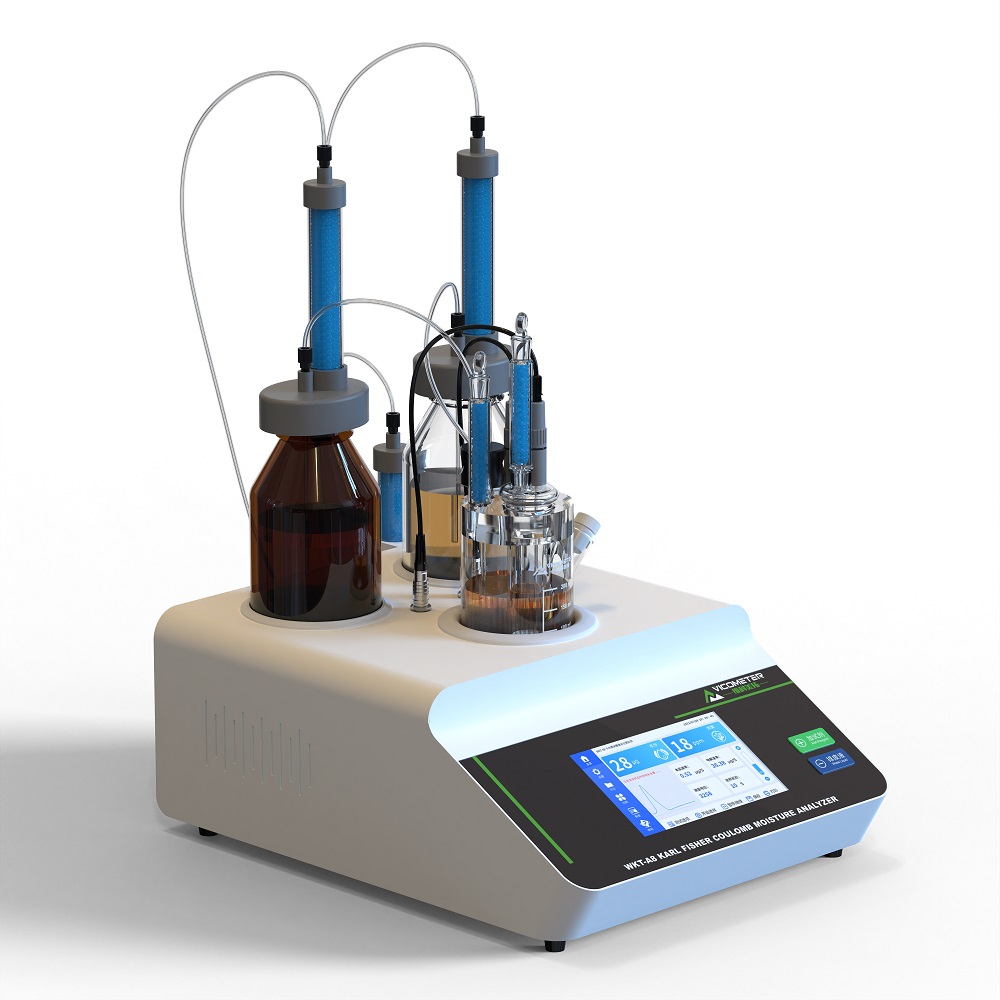
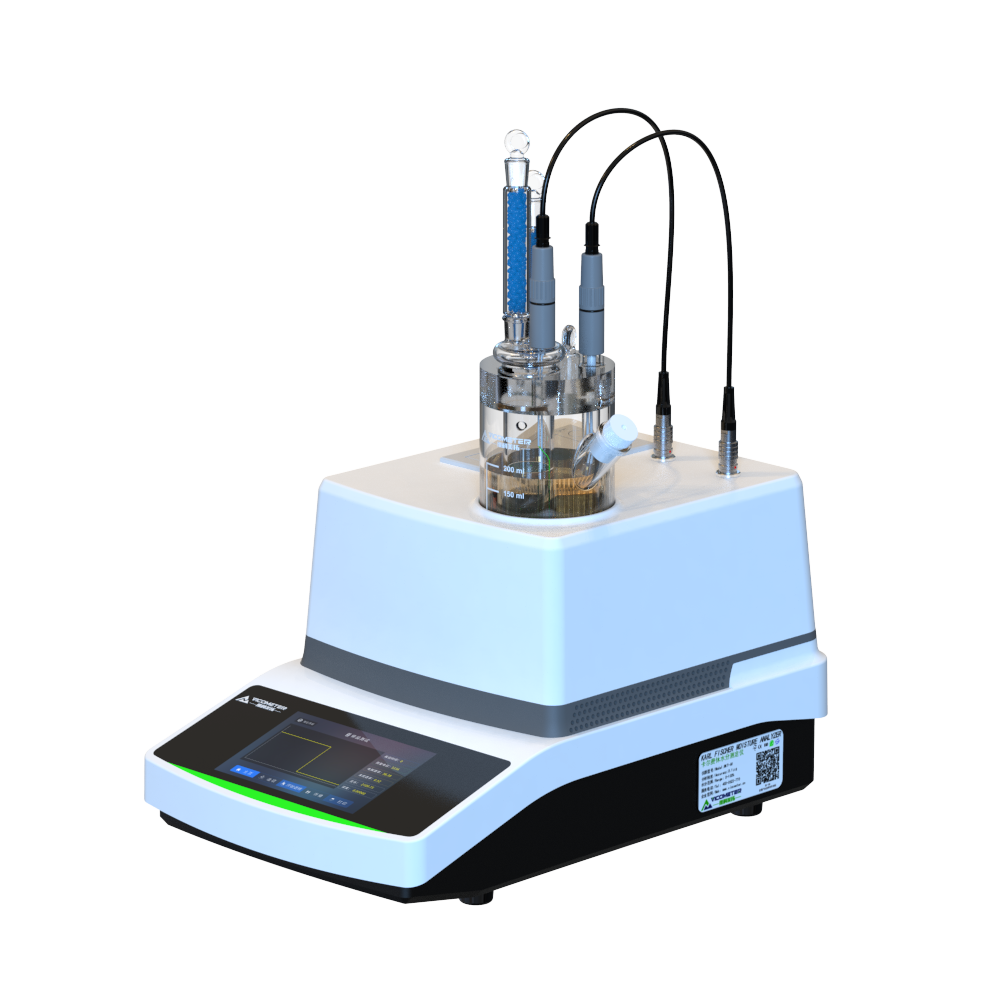
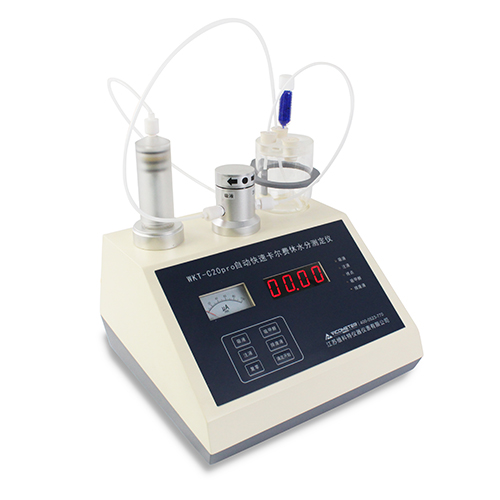
There are two main purposes for testing moisture in petroleum products: first, metering the quantity of oil—deducting the water after gauging gives the actual quantity of oil in the container; second, determining the water content to establish an effective dehydration method and prevent hazards.
Water in petroleum products can cause many hazards:
① Water evaporating from petroleum products absorbs heat, reducing the calorific value of the oil;
② It deactivates additives and worsens low-temperature fluidity, or water in engine fuel freezes and blocks fuel lines and filters, interfering with normal fuel supply;
③ Water in light petroleum products worsens combustion and carries dissolved salts into the cylinders, forming carbon deposits and increasing cylinder wear;
④ Water in petroleum products accelerates oxidation and gum formation;
⑤ Water in lubricants accelerates the corrosion of metals by organic acids, causing rust; moreover, water contacting metal parts above 100°C forms steam, destroying the lubricating oil film and lubrication performance.
The Karl Fischer method (volumetric and coulometric), proposed by Karl Fischer, is the most water-specific and accurate chemical method; recent improvements raised accuracy and range, making it the standard for many substances...Learn More About the Principle of Karl Fischer Moisture Analyzers
Based on different user requirements, VicoMeter offers the following solutions:
Karl Fischer Trace Moisture Analyzer (Coulometric)
Karl Fischer Moisture Analyzer (Volumetric)
Choose the instrument that suits your needs, or contact VicoMeter customer service directly for advice.
Distillation moisture analyzers appeared in the early 20th century, using boiling organic liquids to separate the water from a sample; the method is still in use today.
A water-immiscible organic solvent and the sample are heated together in a distillation moisture apparatus; the water in the sample evaporates with the solvent vapor, condenses in the condenser, and the sample's moisture content is obtained from the volume of water collected.
Accurately weigh 2.00-5.00 g of sample → place in a 250 mL distillation flask → add about 50-75 mL of organic solvent → connect the distillation apparatus → heat gently and distill → after most of the water has distilled over → increase the distillation rate → until the water volume in the graduated tube stops increasing → read
Result calculation:
Moisture = V/W
V —— volume of the water layer in the graduated tube, mL
W —— weight of the sample (g)
Density meters are widely used in the petrochemical industry and are essential instruments in petrochemical laboratories. From crude oil to various oil products such as gasoline, diesel, kerosene and lubricants, density must be measured. There are two main purposes for measuring oil density:
During production and packaging of oil products, metering must be controlled—for example, controlling the volume error of filling to guarantee packaging quality. That is, the oil density is spot-checked during filling, and the filling scale records the filled weight; the filled volume can then be calculated from the density formula density = m/V.
In petroleum cracking, many side reactions accompany the cracking reaction, so finished oils also contain many side-reaction products (including other hydrocarbons, mercaptans, etc.), which affect product quality. When oil contains impurities , its density differs from that of the pure substance, and the density changes as the impurity content changes. Therefore, measuring the sample's density reveals the oil's purity, enabling product quality control.
The national standards GB-1884 and GB-1885 specify the requirements for density measurement in the petrochemical industry. The national standard requires petrochemical density meters to have an accuracy of 0.05%, with measurements taken at 20°C.
The flash point is the lowest temperature, in °C, at which a flammable liquid or solid gives off enough vapor to form a combustible mixture with air at the surface of the liquid or solid in the container used. The flash point of a flammable liquid varies with its concentration; there are two determination methods: the open-cup and closed-cup methods.
Open-cup flash point: mainly used for lubricating oils and heavy petroleum products, because with the open-cup method, the vapor formed as the oil is heated continuously escapes toward
Closed-cup flash point: used for highly volatile light petroleum products such as solvent oils and kerosene. Since the test conditions resemble the actual storage and use conditions of light oils, it can serve as a basis for fire-safety control indicators.
Petroleum product test methods are divided into closed-cup and open-cup mainly according to the nature and use conditions of the products. The closed-cup method is generally used for highly volatile light petroleum products such as solvent oils and kerosene; as the test conditions resemble the actual storage and use conditions of light oils, it can serve as a basis for fire-safety control indicators. The open-cup method is mostly used for lubricating oils and heavy petroleum products. With the open-cup method, the vapor formed as the oil is heated continuously diffuses into the surrounding air, so the measured flash point is higher. For most lubricating oils and heavy oils—especially those used in non-sealed machinery or at moderate temperatures—even small amounts of light fractions will evaporate during use and do not pose a fire or explosion hazard.
The kinematic viscosity of liquid petroleum products (Newtonian liquids) is determined by measuring, at a constant temperature, the time a given volume of liquid takes to flow under gravity through a calibrated glass capillary viscometer. The product of the capillary constant and the flow time is the kinematic viscosity of the liquid at that temperature. Dynamic viscosity is obtained by multiplying the measured kinematic viscosity by the density of the liquid at that temperature.
Acidity is the milligrams of potassium hydroxide required to neutralize 100 mL of the oil sample [mg(KOH)/100 mL], generally applicable to light oils; acid value is the milligrams of potassium hydroxide required to neutralize 1 g of the oil sample [mg(KOH)/g], generally applicable to heavy oils. In the test method, the acidic components are extracted from the sample with boiling ethanol and then titrated with a potassium hydroxide ethanol solution. The acidity or acid value is calculated from the consumption of the KOH ethanol solution.
Finished lubricants mostly contain additives, some acidic and some alkaline, so the acid value should be determined before additives are added. Determining the acid value before additivation indicates the refining degree of the base oil; determining the acid value of oil in service indicates the oil's quality change and serves as a parameter for oil replacement. An excessively high acid value indicates severe oxidative deterioration, and oil replacement should be considered.
Dielectric strength is a measure of the electrical strength of a material as an insulator. It is defined as the maximum voltage per unit thickness that a specimen withstands before breakdown, expressed in volts per unit thickness; the greater the dielectric strength, the better the material's quality as an insulator.
Insulating oil is widely used in high-voltage electrical equipment such as transformers, oil circuit breakers, oil-filled cables, power capacitors and oil bushings. In service, insulating oil gradually deteriorates under the action of oxygen, high temperature, high humidity, sunlight, strong electric fields and contaminants, and can no longer fully perform its insulating function. Regular testing of insulating oil is therefore necessary to determine whether its properties have deteriorated.
VicoMeter provides a complete range of oil testing solutions. In addition to the above instruments, we also offer solutions including but not limited to freezing point and pour point testers, freezing/pour point/cloud point/cold filter plugging point testers, volume resistivity testers, demulsibility testers and petroleum product colorimeters.
View Details
Hot Products
Recently Viewed Products




Copyright © Jiangsu Victor Instrument Meter Co., Ltd. All rights reserved | Sitemap | Technical Support: VicoMeter Operations Center