Detection of Volatile Content in Hydroxyl-Terminated Polydimethylsiloxane with a Halogen Moisture Analyzer
With reference to the test results of volatile content in hydroxyl-terminated polydimethylsiloxane determined by an electric thermostatic blast drying oven, this article discusses the feasibility of using a halogen moisture analyzer to detect the volatile content of hydroxyl-terminated polydimethylsiloxane, derives the time required to obtain corresponding results, and verifies it. The results show that the traditional electric thermostatic blast drying oven heating method takes a long time to determine the volatile content of hydroxyl-terminated polydimethylsiloxane, while the halogen moisture analyzer is heated by a built-in halogen drying unit, with fast and uniform heating...
Abstract: With reference to the volatiles content of hydroxyl-terminated polydimethylsiloxane determined using an electric thermostatic blast drying oven, this paper discusses the feasibility of using a halogen moisture analyzer to determine the volatiles content, derives the time required to obtain equivalent results, and verifies them. The results show that the traditional oven heating method is time-consuming, while the halogen moisture analyzer heats with a built-in halogen drying unit, with fast, uniform heating and good repeatability; weighing and heating are completed in one step. Using a halogen moisture analyzer to determine the volatiles content can greatly improve testing efficiency and meet the needs of production testing and quality control, with a relative error of less than 5% between the two methods.
Hydroxyl-terminated polydimethylsiloxane is a linear reactive polysiloxane—a straight-chain, silicone-functional polysiloxane with hydroxyl functional groups directly attached to the silicon atoms at both ends. Through further reactions, this silicone-functional polysiloxane can be made into high-molar-mass linear or crosslinked polysiloxanes. It is the main raw material for products such as room-temperature vulcanized silicone rubber, one of the main products of the silicone industry, with large output and wide application.
Since various factors in the production process can affect the volatiles content of hydroxyl-terminated polydimethylsiloxane and thus the quality of the finished product, the national standard has specified technical requirements for volatiles content and made it a test item in type inspection and routine inspection.
The main methods for determining volatiles are the electric thermostatic blast drying oven method and the halogen moisture analyzer method. The oven method has a clear principle, simple operation, strong reproducibility and low instrument cost, and is generally suitable for manufacturers' self-inspection and incoming inspection; but it is time-consuming and cannot rapidly test large numbers of samples—a certain limitation. The halogen moisture analyzer method uses a halogen lamp as the heat source and determines volatiles by the thermogravimetric principle, with fast and uniform heating that quickly dries samples and yields accurate volatiles results with good reproducibility.
In many industrial and laboratory settings, the halogen moisture analyzer method has gradually replaced the oven method thanks to its simple operation, fast testing, small sample requirements and excellent agreement with the oven method.
This experiment, using the oven method results as reference, discusses the feasibility of determining the volatiles content of hydroxyl-terminated polydimethylsiloxane with a halogen moisture analyzer and derives the required testing time.
Hydroxyl-terminated polydimethylsiloxane: viscosity 20000 mPa·s, 50000 mPa·s, 80000 mPa·s.
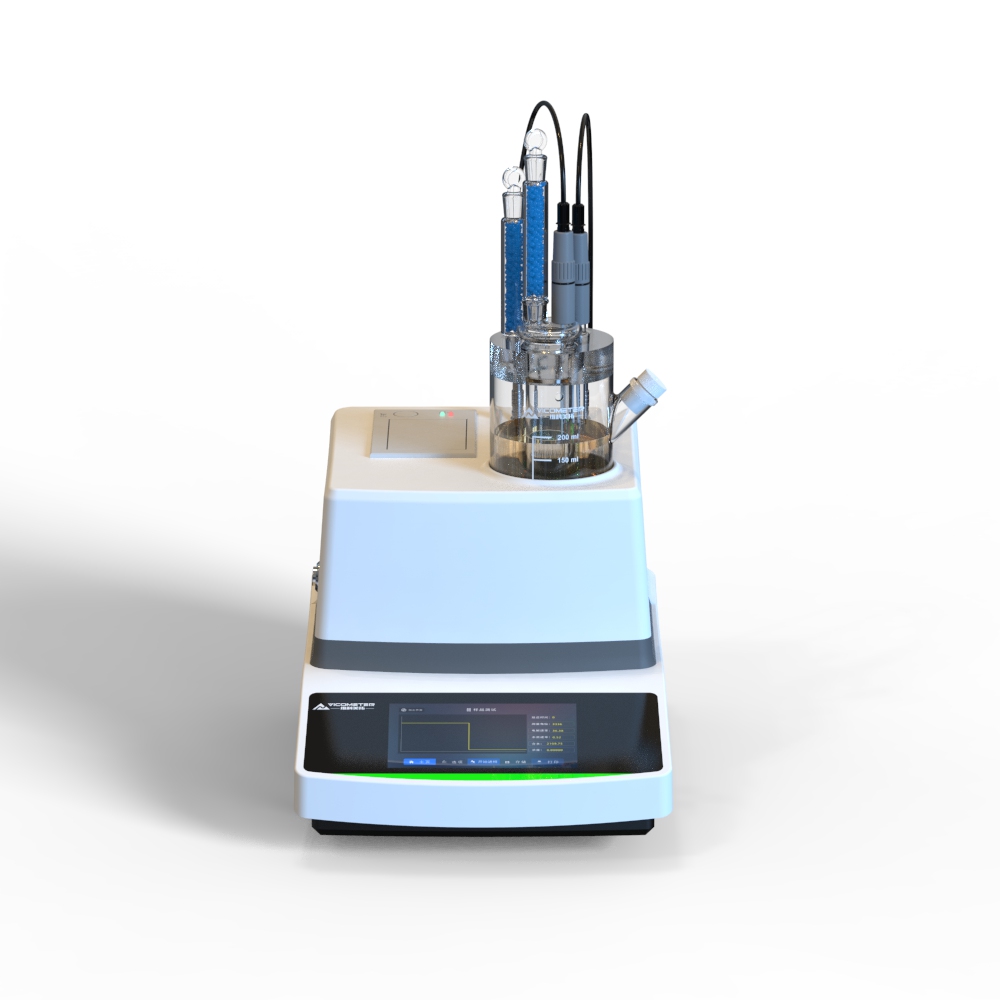
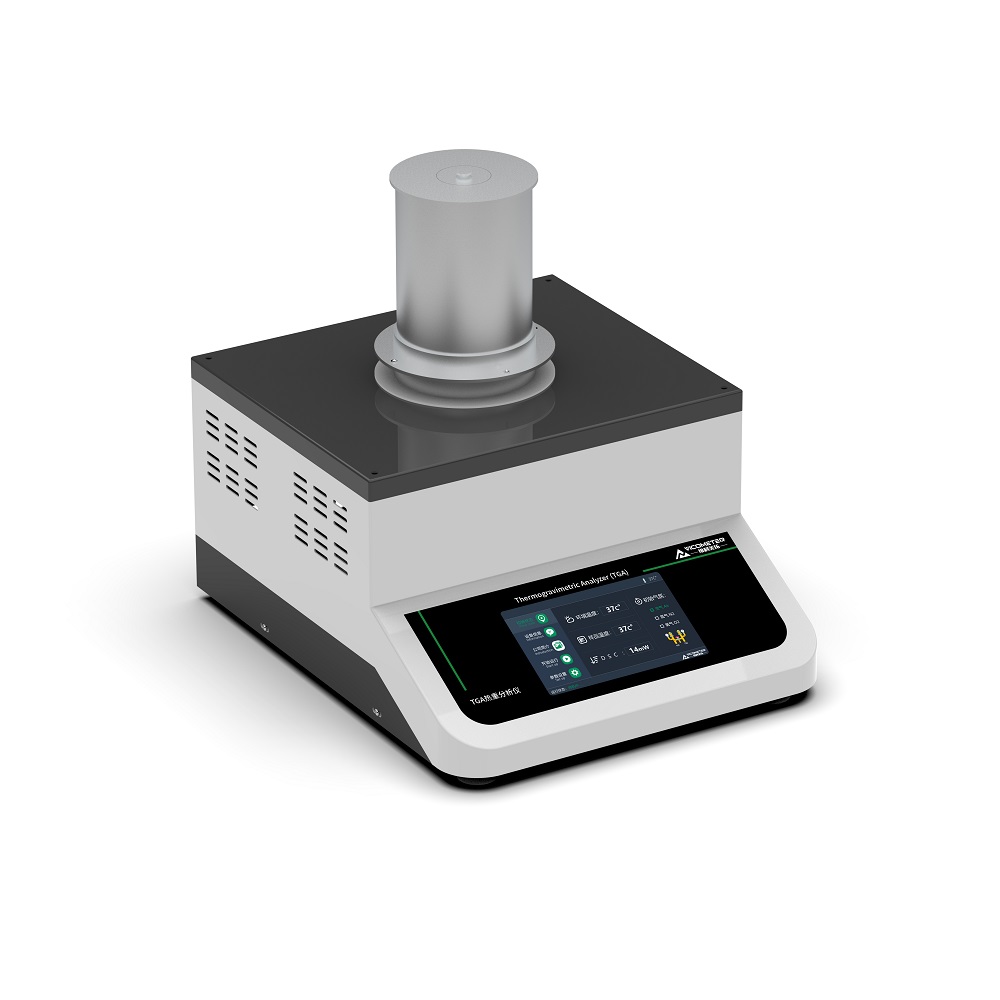
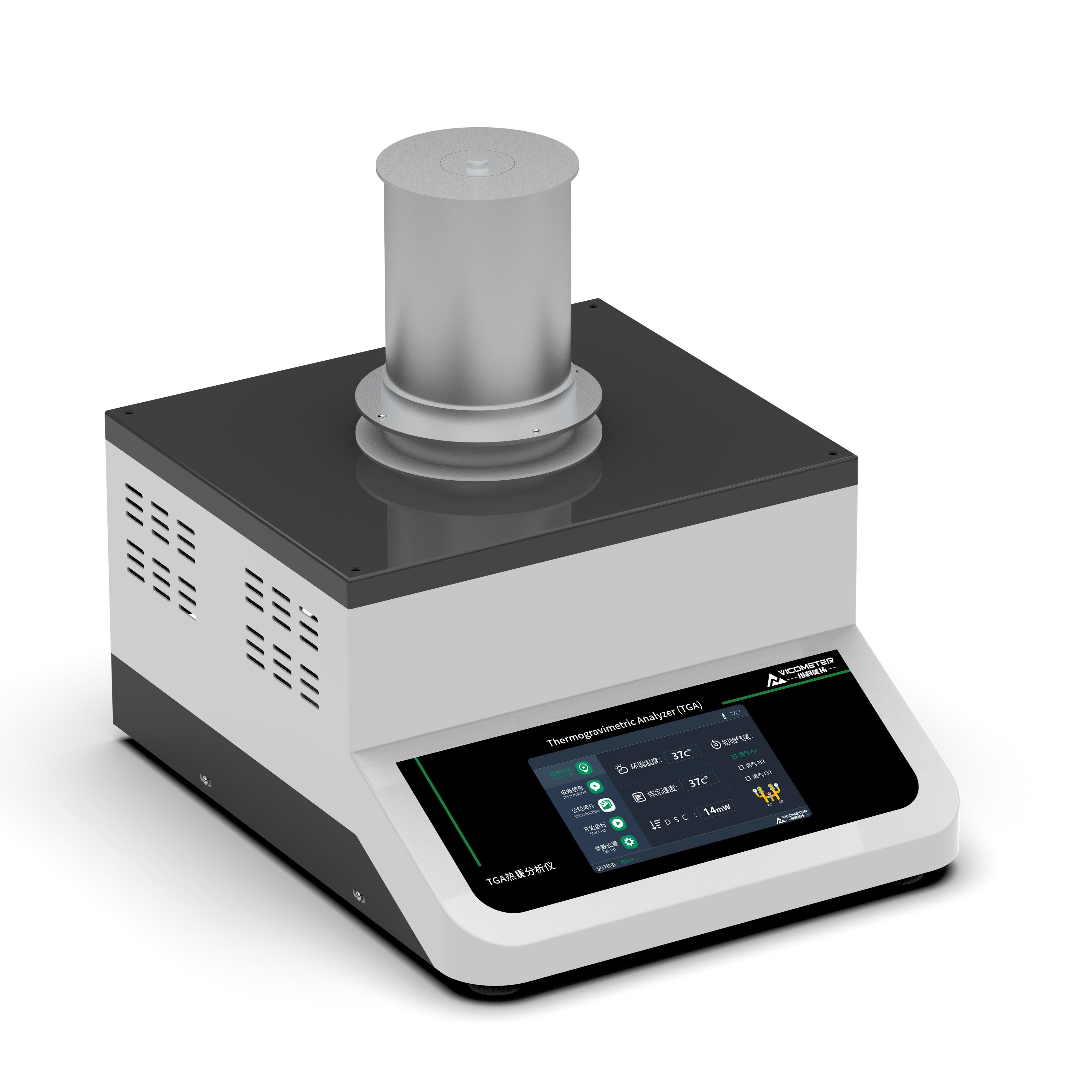
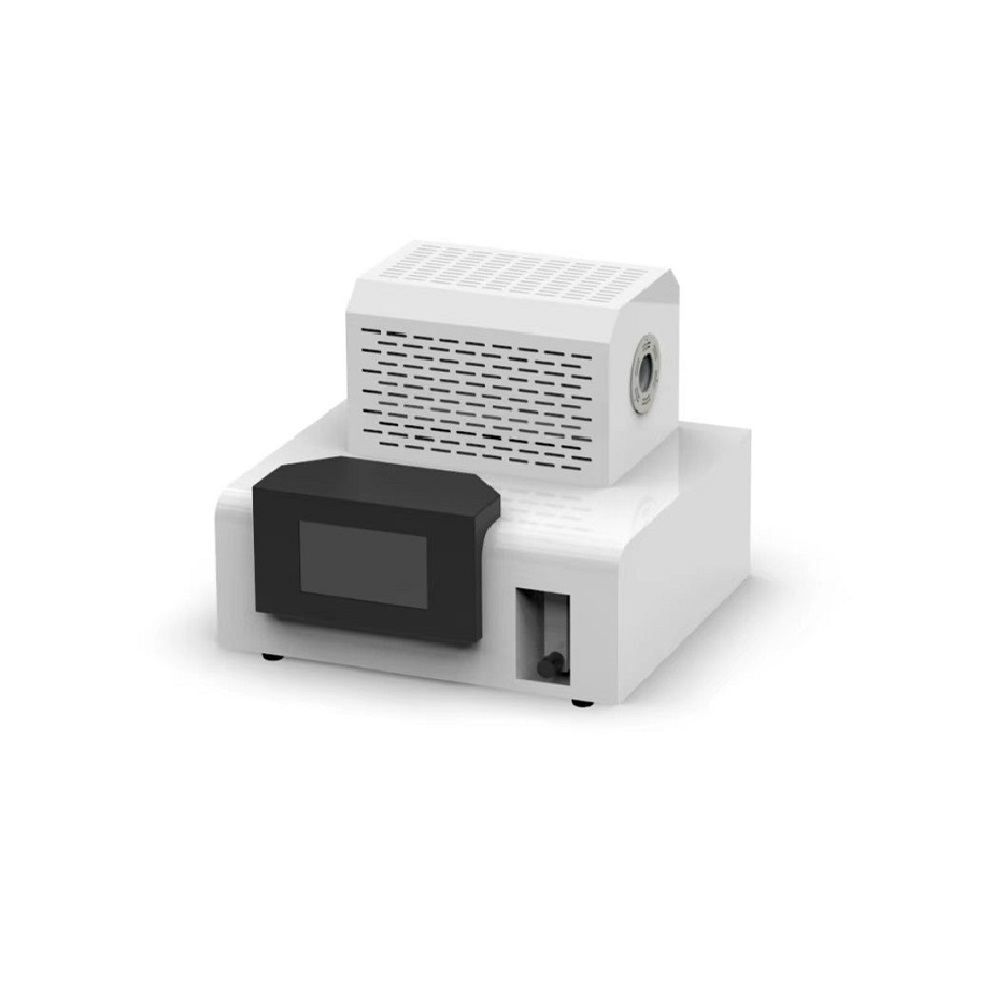
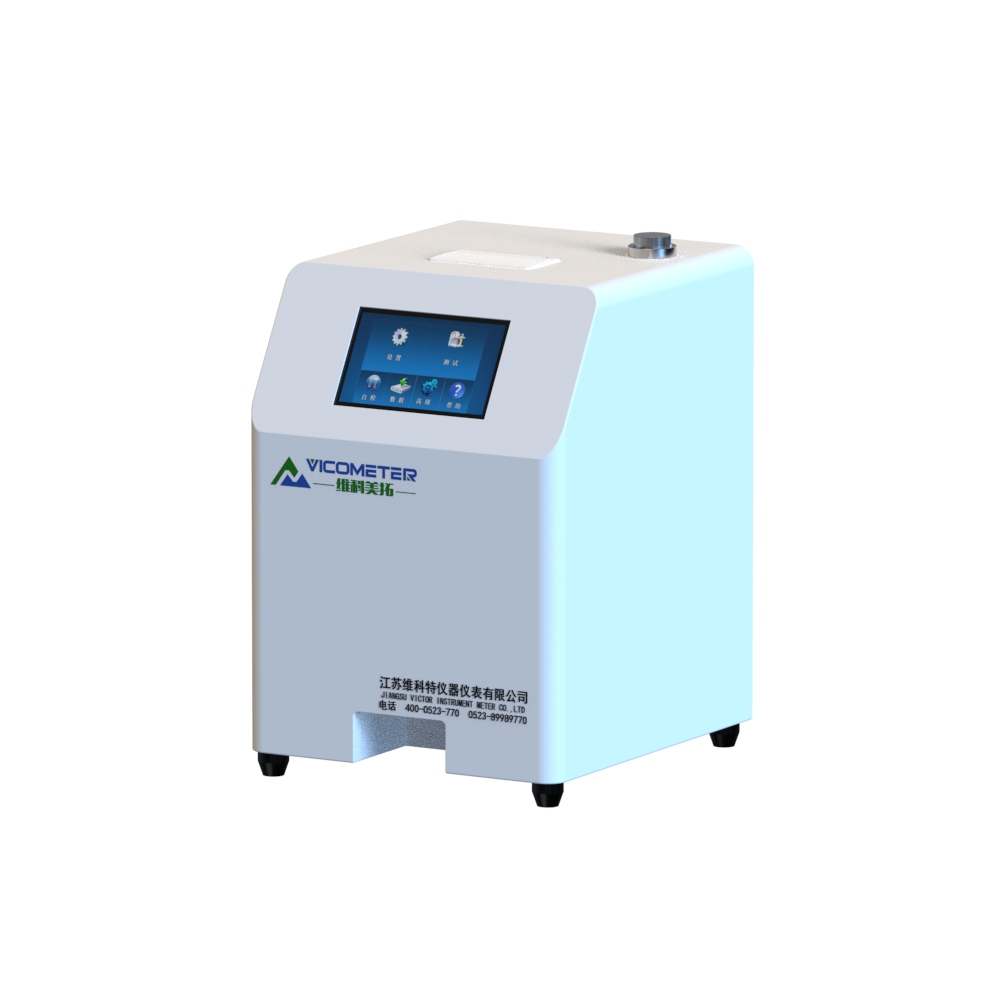
Electric thermostatic blast drying oven; VicoMeter VM-E series halogen moisture analyzer. Instrument introduction videos are as follows:
Weigh (4±0.5) g of sample into a weighing bottle of constant mass, place it in the oven at (150±2)°C for 3 h, then remove it, cool to room temperature in a desiccator (about 30 min) and weigh. Calculate the volatiles content using Equation 1. Each sample is measured twice and the average taken.
w(volatiles)=[(m1-m2)/(m1-m0)]x100%
where w(volatiles) is the mass fraction of volatiles, %; m0 is the mass of the weighing bottle, g; m1 is the mass of the sample and bottle before drying, g; m2 is the mass of the sample and bottle after drying, g.
Weigh (4±0.5) g of sample onto the aluminum pan of the halogen moisture analyzer. Set the testing temperature to 150°C and the stop mode to manual; close the drying unit, and once the displayed temperature rises to 150°C and stabilizes, start timing. Record the volatiles content shown on the display at 3 min, 5 min, 7 min and 10 min (if the value within 10 min does not equal the oven method result, extend the testing time). Each sample is measured twice and the average taken.
The relative error of the sample volatiles content is calculated using Equation 2.
δ=(X-X1)/X1×100%
where δ is the relative error, %; X is the measured mass fraction of volatiles, %; X1 is the average mass fraction of volatiles, %.
Using the oven method, 55 batches of samples were tested, with an average relative error of volatiles content of 5.31%. To ensure more accurate results and convenient calculation, the reasonable relative error of volatiles content was set at 5%.
Samples from one batch of the above experiment were randomly selected for extended-time testing; the results are shown in Table 1.
Table 1 Relationship between testing time and volatiles content for a sample batch

As shown in Table 1, the volatiles content increases with the heating time in the halogen moisture analyzer; therefore, using a halogen moisture analyzer to determine the volatiles content of hydroxyl-terminated polydimethylsiloxane is preliminarily feasible.
The 55 batches of samples from 2.1.1 were tested with the halogen moisture analyzer, recording the volatiles content at each time point and plotting the curves.
Figure 1 shows the curve of testing time versus volatiles mass fraction for the 1500 mPa·s viscosity batch.

Figure 1 Testing time versus volatiles mass fraction for the 1500 mPa·s batch
Based on the reasonable relative error determined in 2.1.1 and the average oven method values, the curves were used to find the theoretical testing time range of the halogen moisture analyzer within the reasonable error range of volatiles content for each sample.
Statistics show that within the theoretical testing time range of 5.5-7.5 min, 50 batches of samples (90.91% of the total) gave volatiles contents within the reasonable error range; among them, 28 batches (56% of the 50) measured within the reasonable error range at the 6.5 min theoretical time point, and another 10 batches were close to the 6.5 min point. The testing time of the halogen moisture analyzer was therefore set at 6.5 min.
Using the derived detection time of the halogen moisture analyzer, verification was carried out on 17 batches of samples; the results are shown in Table 2.
As shown in Table 2, the relative error between the volatile content of samples heated for 6.5 min with the halogen moisture analyzer and that of samples heated for 3 h in an electric thermostatic blast drying oven was less than 5%.
Table 2 Relationship between the mean values measured with the electric thermostatic blast drying oven and the mean values measured with the halogen moisture analyzer at 6.5 min

Note: 1) The ratio of the absolute difference between the mean value measured with the halogen moisture analyzer and that of the drying oven to the oven's mean value.
Determining the volatile content of hydroxyl-terminated polydimethylsiloxane with the traditional oven method is time-consuming, while the halogen moisture analyzer heats via a built-in halogen drying unit — fast, uniform, and highly repeatable, with weighing and heating completed in one step. It greatly improves testing efficiency, readily meets production and QC needs, and shows a relative error below 5% versus the oven method.
Xie Xiaoling, Tian Fang, Huang Shaohua, Guo Jialing, Chen Wenhao. Study on the Determination of the Volatile Content of Hydroxyl-Terminated Polydimethylsiloxane Using a Halogen Moisture Analyzer. TQ264.1+4 1009-4369(2013)04-0282-04
Niu Rong, Tian Fang, Wang Hongmin. Study on the Relationship Between the Viscosity of Hydroxyl-Terminated Polydimethylsiloxane and Temperature [J]. Silicone Material, 2004, 18(5): 9.
Lai Guoqiao, Xing Songmin. Organosilicon Synthesis Technology and Product Applications [M]. Beijing: Chemical Industry Press, 2009: 542-543.
General Administration of Quality Supervision, Inspection and Quarantine of the PRC; Standardization Administration of China. Room-Temperature Vulcanized Methyl Silicone Rubber, GB/T 27570-2011. China Standards Press, 2012: 2.
Yuanshi County Yongfang Food & Chemical Glassware Business. Discussion on Determining Total Moisture in a Coal Testing Laboratory Using a Halogen Moisture Analyzer [EB/OL]. (2011-12-08) [2012-10-15]
Recently Viewed Products




Copyright © Jiangsu Victor Instrument Meter Co., Ltd. All rights reserved | Sitemap | Technical Support: VicoMeter Operations Center