Karl Fischer Moisture Analyzers
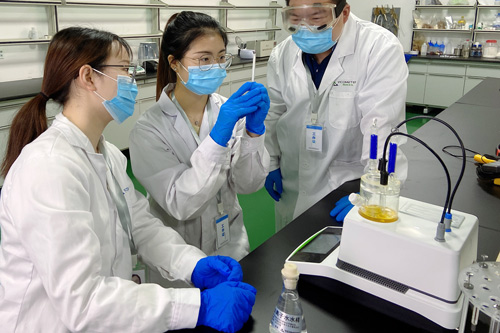
A Karl Fischer moisture analyzer is an instrument designed on the Karl Fischer method to measure moisture content in materials. It is also known as a Karl Fischer moisture meter, fully automatic Karl Fischer moisture titrator, intelligent Karl Fischer trace moisture analyzer, or Fischer-method moisture meter, and comes in two types: coulometric and volumetric (titrimetric).

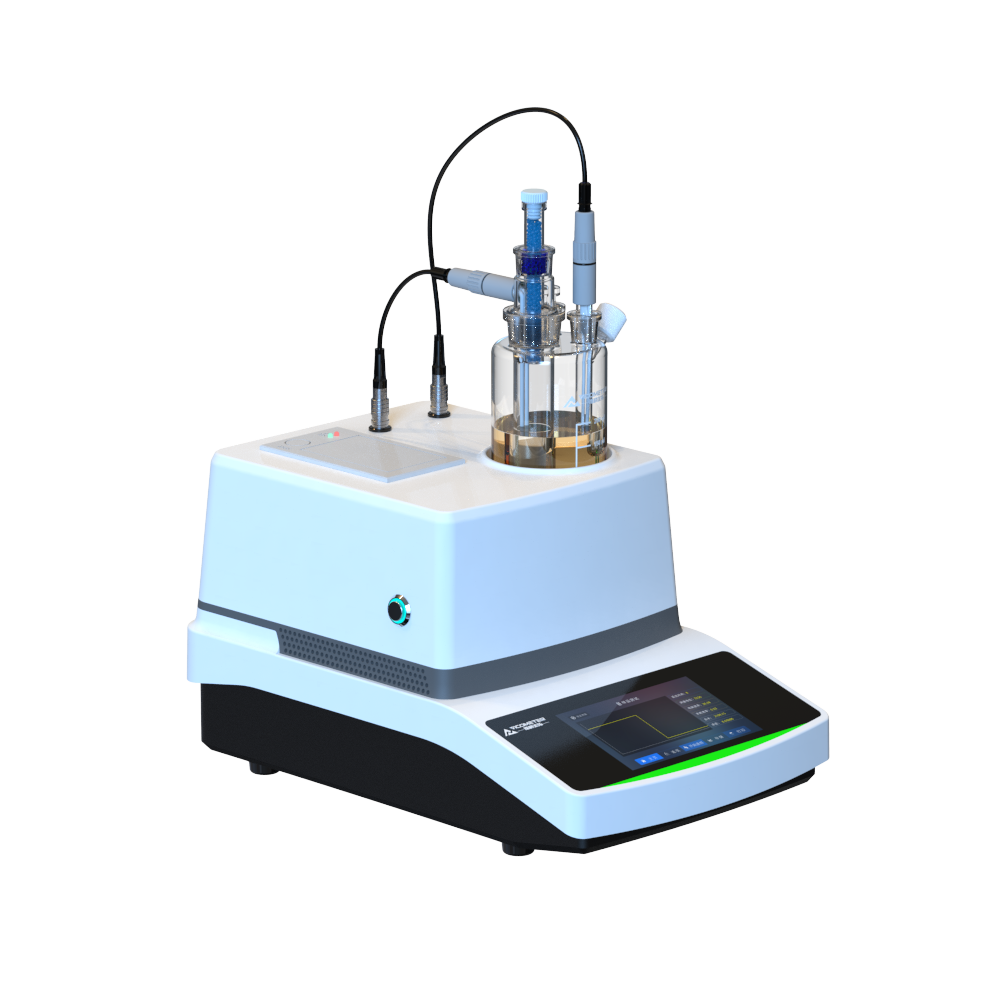
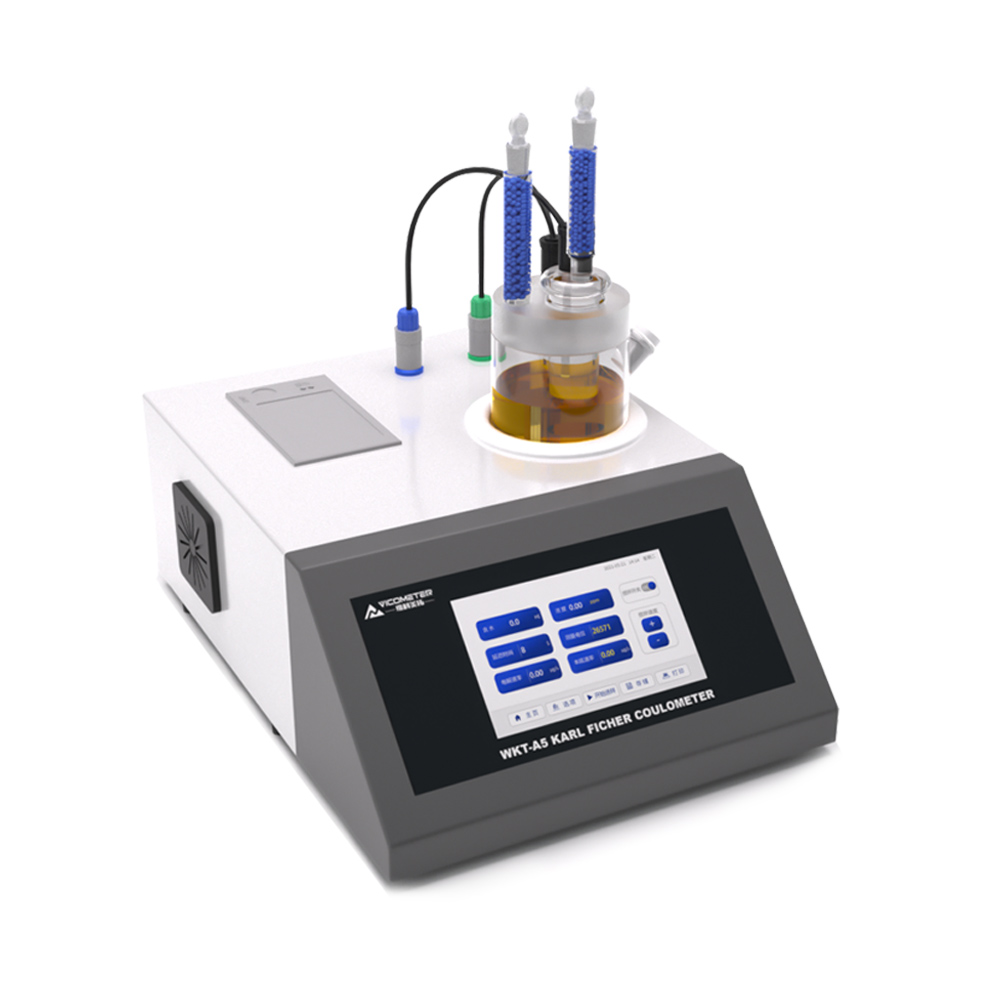
WKT-A9Karl Fischer Moisture Analyzers
A Karl Fischer moisture analyzer is an instrument designed and produced on the Karl Fischer principle to determine the moisture content in materials. It is also called a Karl Fischer moisture meter, fully automatic Karl Fischer moisture titrator, intelligent Karl Fischer trace moisture analyzer, or Fischer method moisture analyzer. There are two types: coulometric and volumetric (titration) Karl Fischer moisture analyzers. Generally, the volumetric method is used for moisture above 1000 ppm, and the coulometric method for moisture below 1000 ppm, though the distinction cannot be generalized — see the following text for details.
Among all chemical methods for determining moisture in substances, the Karl Fischer method is the most specific and accurate for water. Improved in recent years with greater accuracy and an expanded measuring range, it has been adopted as the standard method for moisture determination in many substances.
The Karl Fischer method, abbreviated as the Fischer method, is a volumetric analysis method for determining moisture proposed by Karl Fischer in 1935. Among all chemical methods for determining moisture in substances, it is the most specific and accurate for water. Improved in recent years with greater accuracy and an expanded measuring range, it has been adopted as the standard method for moisture determination in many substances.
The Fischer method has two variants: titration (volumetric) and coulometric. It is suitable for determining water content in many inorganic and organic compounds and is a world-recognized classic method for determining moisture content. It can quickly determine moisture in liquids, solids, and gases; it is the most specific and accurate chemical method and a universally used industry-standard analysis method. It is widely applied in the petroleum, chemical, power, pharmaceutical, food, testing, and pesticide industries, as well as in universities and scientific research.
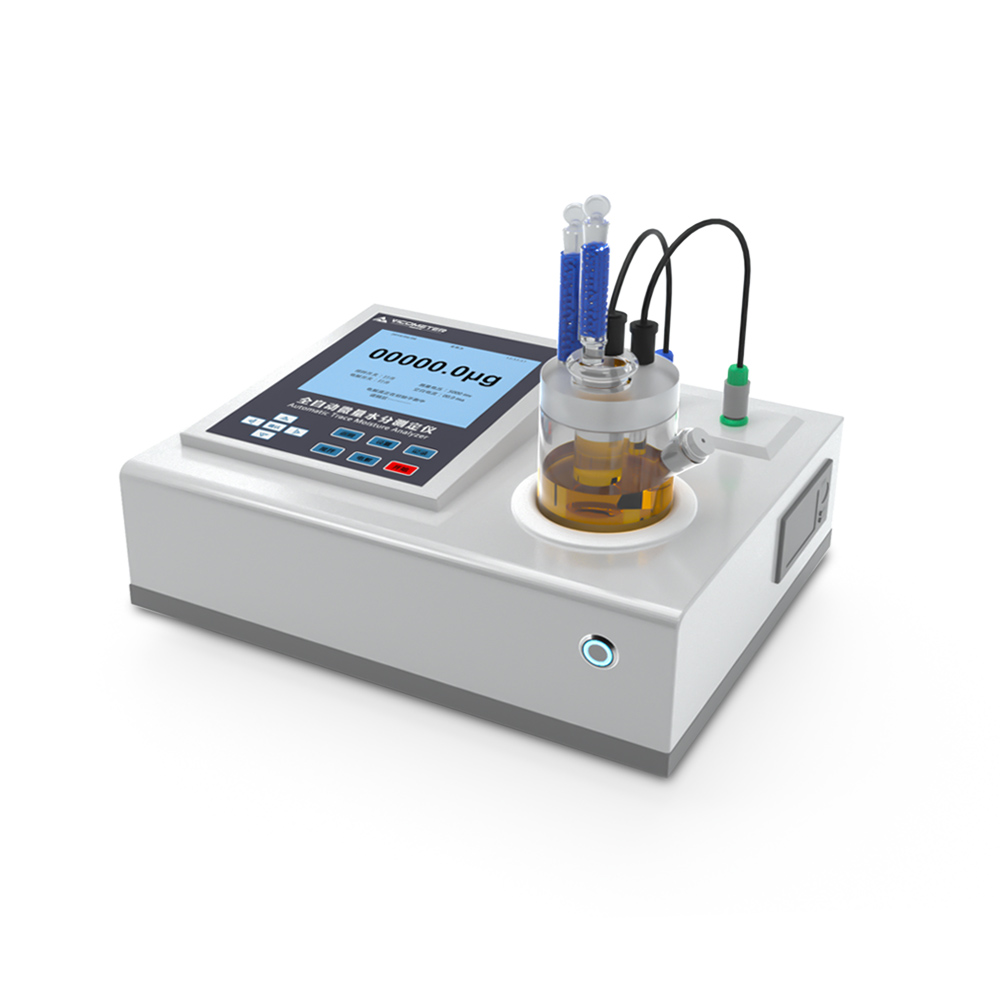
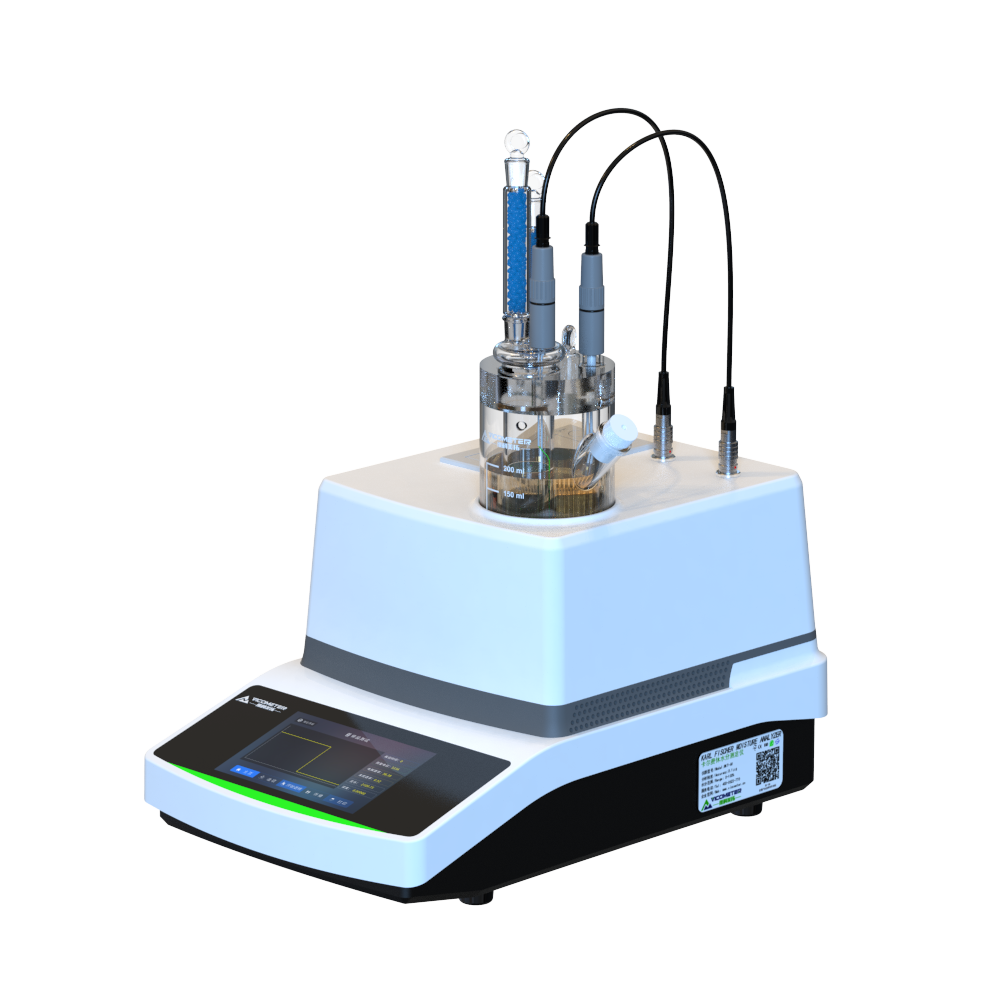
WKT-A3 Karl Fischer Moisture Analyzer
When iodine oxidizes sulfur dioxide, a certain amount of water participates in the reaction: I2+SO2+2H2O=2HI+H2SO4 The reaction is reversible; an alkaline substance must be added, and the reagent must include methanol or another solvent with active OH groups so pyridine sulfuric anhydride converts into stable methyl sulfuric acid pyridinium hydrogen.
C5H5N·SO3+CH3OH→C5H5N·HSO4CH3
In KF coulometric titration, the required iodine is generated directly by electrolysis; water content is calculated from the charge-iodine relationship. When free iodine appears, the voltage across the Pt indicator electrodes drops sharply—marking the endpoint.
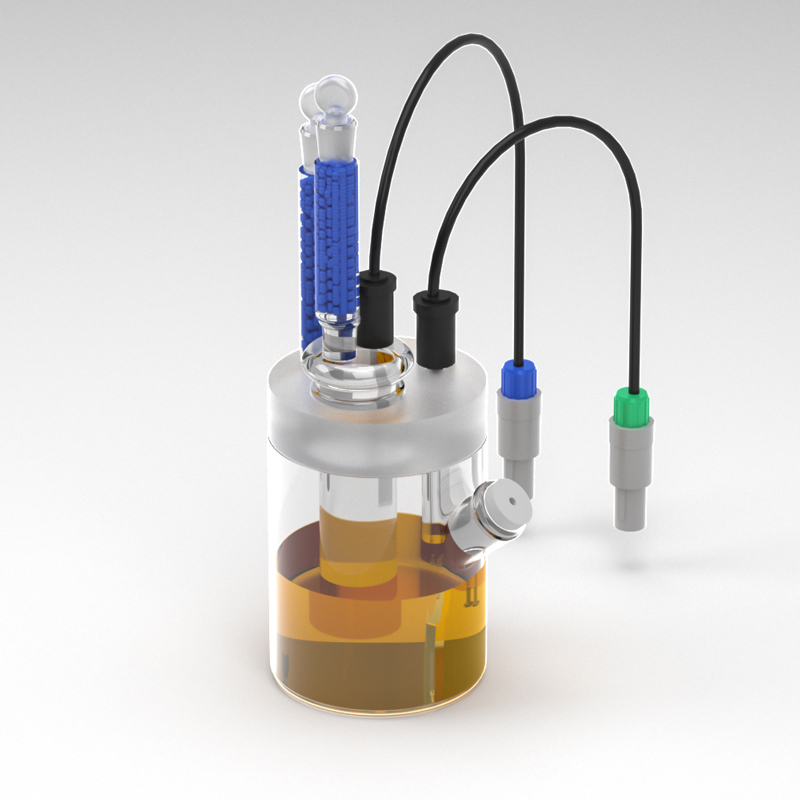
VicoMeter Karl Fischer Electrolytic Cell
During electrolysis, the electrode reactions are as follows:
Anode: 2I--2e→I2
Cathode: I2+2e→2I- ,2H++2e→H2↑
From the above reactions, 1 mole of iodine oxidizes 1 mole of sulfur dioxide, requiring 1 mole of water. Thus, it is an equivalent reaction of 1 mole of iodine with 1 mole of water — the electricity used to electrolyze iodine is equivalent to that for electrolyzing water. Electrolyzing 1 millimole of iodine requires 2×96493 millicoulombs, and electrolyzing 1 millimole of water requires 2×96493 millicoulombs. 1 mol of iodine can consume 18.015 g of water.
The moisture content in the sample is calculated by the following formula:
From Faraday's law of electrolysis: W×10-6/18=Q×10-3/2*9.6493,
Therefore W=Q/10.722
Where: W--moisture content (μg); Q--electrolysis charge (mC); 18--molecular weight of water.
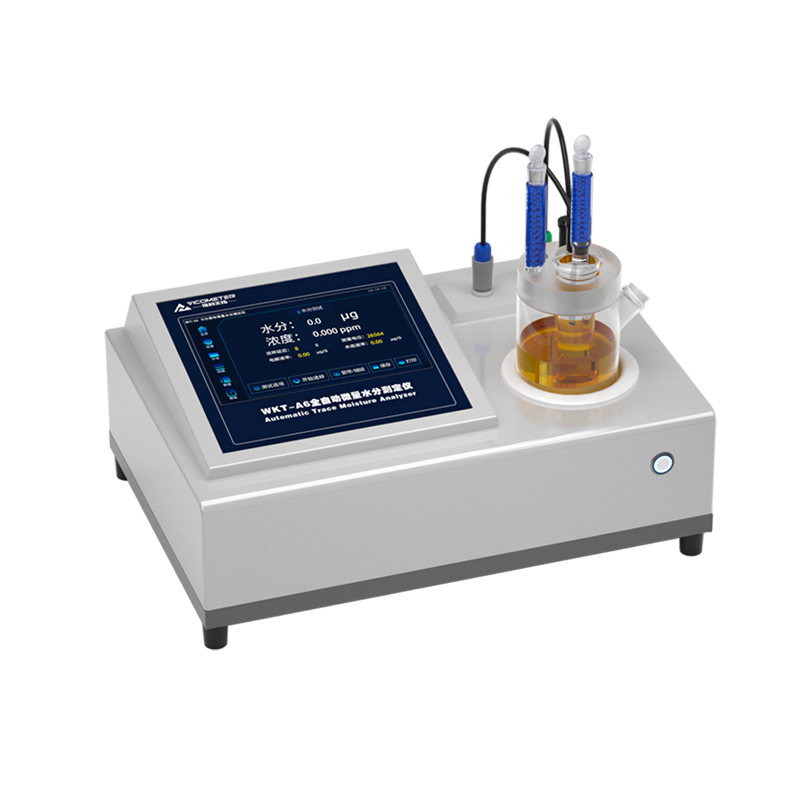
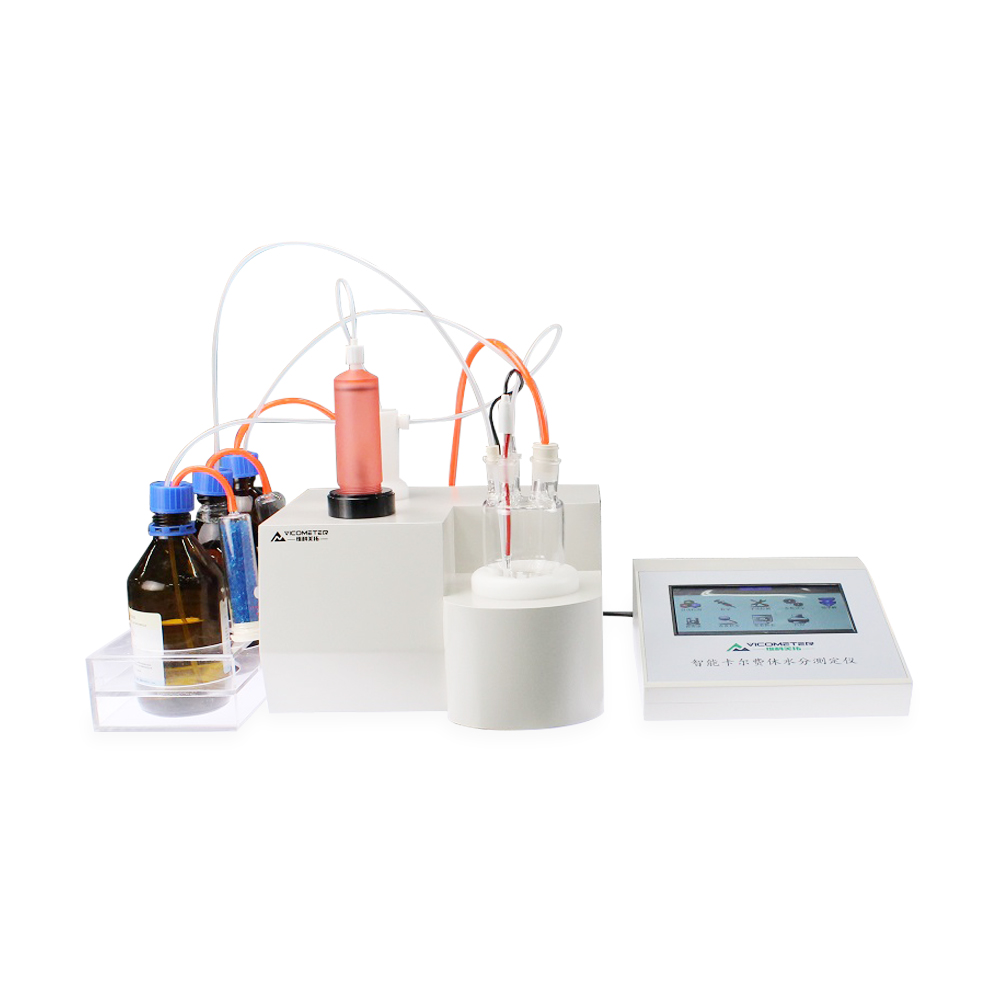
WKT-A6Karl Fischer Moisture Analyzers
The principle of Karl Fischer titration involves two reaction steps, as shown below:
(1) CH3OH + SO2 + RN → [RNH]SO3CH3 (RN = organic base)
(2) H2O + I2 + [RNH]SO3CH3 + 2RN → [RNH]SO4CH3 + 2[RNH]I (RN = organic base)
During the reaction, iodine and water are consumed in a 1:1 molar ratio; by measuring the amount of iodine consumed, the water content in the sample can be calculated.
Karl Fischer moisture determination is an electrochemical method that can be divided intovolumetricandcoulometrictwo types.
When the volumetric method determines moisture content, it is mainly based on the electrochemical reaction:
Anode: 2I- - 2e → I2 ; Cathode: I2 + 2e → 2I-; 2H+ + 2e → H2↑
When both I2and I-are present in the reaction cell, the above reactions proceed simultaneously at both electrodes — I2is reduced at the positive electrode and I-is oxidized at the negative electrode; therefore, current flows between the two electrodes. If only I-is present in the solution, without I2, no current flows between the two electrodes.
Karl Fischer reagent contains active components such as iodine and an organic base (e.g., pyridine). When metered into the reaction cell, it undergoes the above reactions (1) and (2) with the water in the sample.
As the reaction proceeds, water is continuously consumed and I-is generated until the titration endpoint, when all water is consumed. At this point, a trace of unreacted Karl Fischer reagent remains in the solution, with I2and I-coexisting; current begins to flow between the two electrodes, indicating the endpoint, and titration stops. The moisture content of the sample is determined by metering the volume of Karl Fischer reagent consumed.
In the coulometric method (also called the electrometric method), the sample is dissolved in an electrolyte containing a special iodine-based solvent; the water in the sample reacts with and consumes iodine. However, the required iodine is no longer a standardized iodine reagent, but is generated by anodic oxidation of I- in the solution. The generated iodine reacts with the water in the sample and is consumed, then regenerated by electrolysis. When all water has reacted and the iodine concentration in the electrolyte returns to the preset level (excess generated iodine causes a potential change), electrolysis stops. The moisture content of the sample is then calculated according to Faraday's law of electrolysis.
The biggest difference between the volumetric and coulometric methods is that I2differ in their source: in the volumetric method, I2comes from the titration reagent, whereas in the coulometric method2is produced by electrolyzing an electrolyte containing I-is generated by electrolysis of the electrolyte.
In the coulometric method, the quantitative relationship between the electric quantity of the electrolytic cell and the generated iodine is strict, so the coulometric method offers higher measurement accuracy. At the same time, due to its limited electrolysis speed, when the sample moisture content is low, the Karl Fischer coulometric method not only provides fast detection but also good data parallelism.
Generally speaking, when the sample moisture content is <1000 ppm, the coulometric method is ideal; when the moisture content is ≥1000 ppm, the volumetric method is more suitable.
The organic base serves to neutralize the acidic substance (alkyl sulfurous acid) produced during titration, ensuring the system proceeds within a suitable pH range. Research has found that pyridine is not the most suitable base. Being weakly basic, it cannot completely neutralize the acidic intermediates, resulting in a slower, incomplete overall reaction and poor repeatability of results. In addition, pyridine emits an unpleasant odor. As the method has evolved, pyridine has gradually been replaced by more suitable bases (such as imidazoles).
Since the coulometric method determines moisture by calculating the electricity consumed in electrolyzing iodine, the sample must not undergo the following side reactions: a) reacting with Karl Fischer reagent to generate water; b) consuming iodine or releasing iodine in the detection cell. Consequently, certain samples — such as iron salts, nitrites, ketone salts, oxides, hydroxides, aldehydes, ketones, metal peroxides, strong oxidizing agents, strong acids, and boron-containing compounds — cannot be tested by the coulometric method.

WKT-V2-A9 Karl Fischer Moisture Analysis System
General samples can be added directly to the electrolytic/titration cell for simple, accurate testing. However, some samples cannot be added directly because their moisture cannot be released naturally or they react side-wise with Karl Fischer reagent — such as powdered, granular, viscous, or oxidizing inorganic salts.
For samples that cannot be added directly to the electrolytic cell, gas-phase extraction is a perfect solution. The sample is placed in a sample boat/vial, moved into the heating oven or sample rack, and heated to a specific temperature (up to 300˚C). The moisture is extracted and transferred to the titration vessel by dry air or nitrogen, and the moisture concentration is then measured by the Karl Fischer analyzer.
The gas-phase extraction method can conveniently and accurately determine the moisture content of solid, powder, granular, or viscous samples, such as:
Substances whose moisture must be released by heating: powdered or granular plastic products
Substances that react side-wise with Karl Fischer reagent: oxidizing inorganic salts
Highly adhesive substances: fibers or pastes
Hard-to-dissolve or insoluble substances: lubricating oil, wool, flour, tar, or coal
The VicoMeter Karl Fischer oven system easily heats samples in the sample boat to "100-300°C"; the water vapor is transferred by carrier gas into the electrolytic cell of the Karl Fischer moisture analyzer and rapidly absorbed by the Karl Fischer reagent, enabling accurate moisture determination of low-moisture or low-density samples with ease.
The rugged and durable design of the VicoMeter Karl Fischer oven ensures trouble-free sample handling and correct results. The sample vial is placed in the oven body, where it is continuously heated from the bottom and all sides, ensuring uniform temperature distribution. The moisture released from the sample is transferred to the titration vessel via the carrier gas. A specially designed rubber stopper ensures a perfect seal with no vapor escape, achieving a recovery rate of up to 100% and guaranteeing accurate results from the subsequent Karl Fischer analyzer measurement.
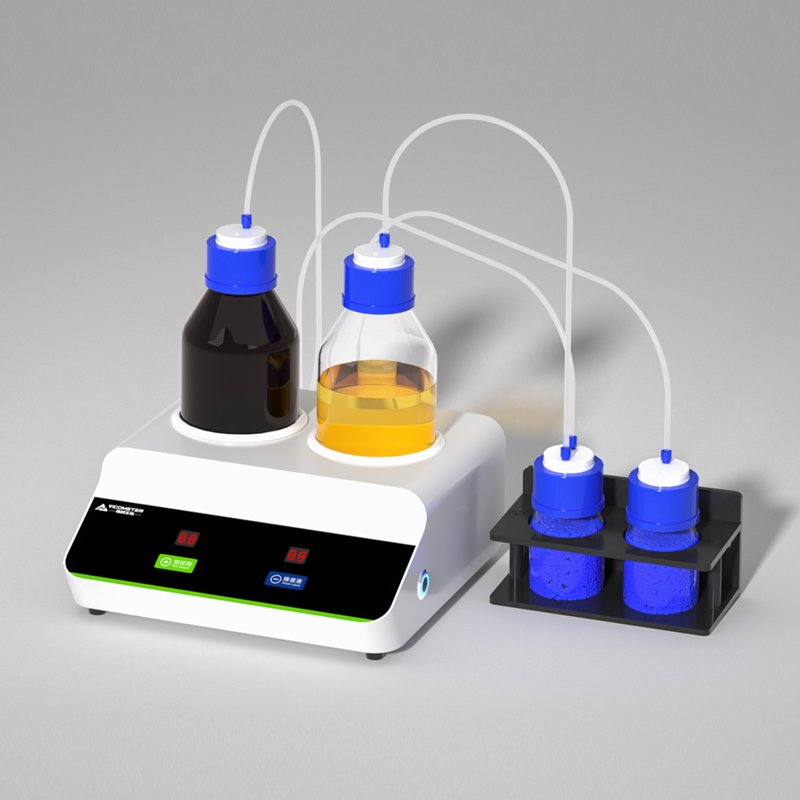
WKT-AHY02 Automatic Solvent Manager
Operators should avoid contact with Karl Fischer reagents as much as possible. The automatic solvent manager handles reagent filling, draining, and replacement, preventing direct operator contact with reagents and ensuring operational safety.
The automatic solvent manager is a new type of reagent exchanger used with Karl Fischer trace moisture analyzers. It has built-in filling/draining pumps, adopts an automatic pressure-relief three-way valve design, and features filling/draining countdown and anti-backflow functions. The instrument is exquisitely designed, compact, simple, and intuitive. With push-button design and one-touch access, a single press starts automatic liquid reagent management — operators can complete reagent exchange without touching the reagents, making it a great helper for solvent management in moisture determination.
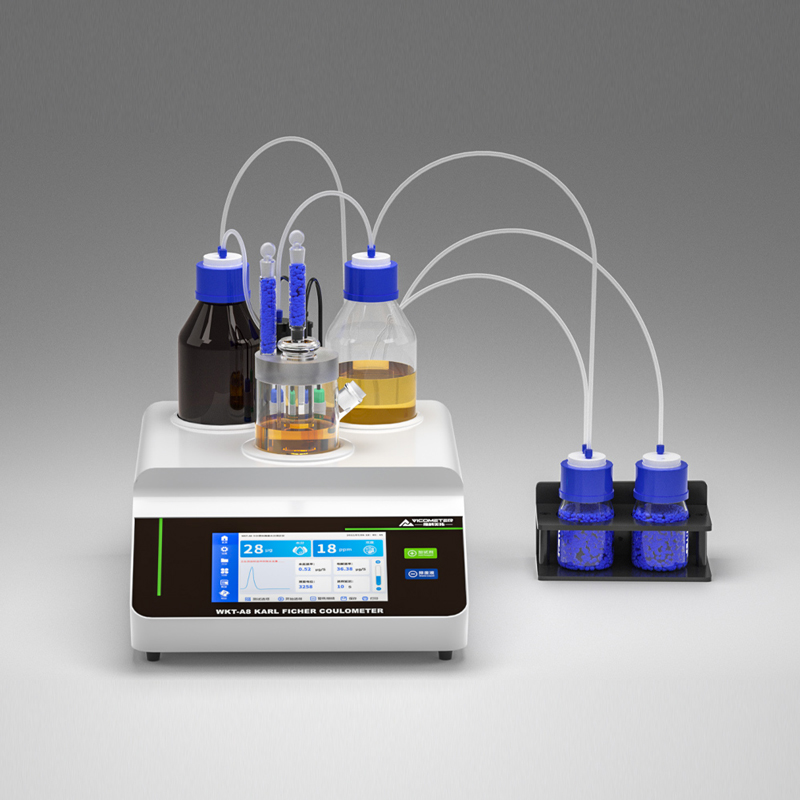
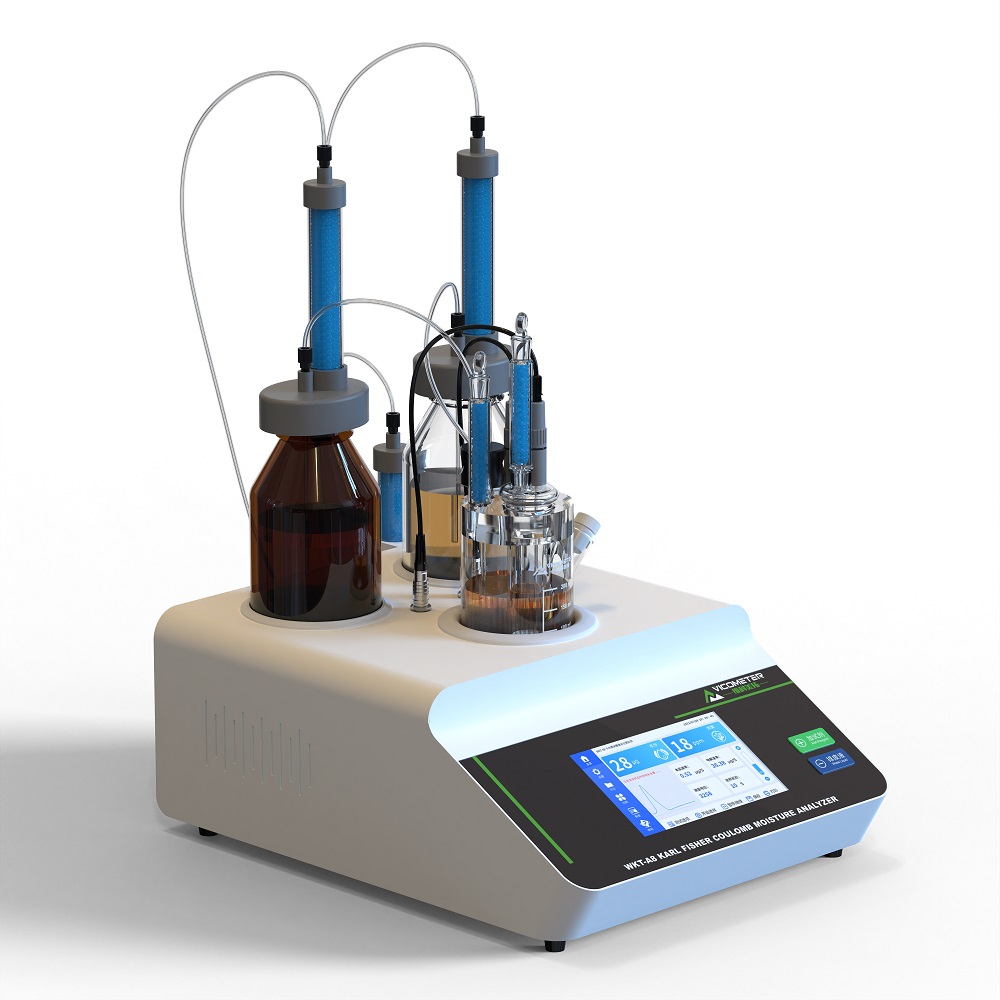
WKT-A8 Fully Automatic Reagent Exchange Moisture Analyzer
The fully automatic reagent exchange Karl Fischer moisture analyzer system has a built-in automatic solvent manager, easily achieving one-touch filling and one-touch draining of Karl Fischer reagent; operators need no direct contact with the reagent, ensuring safe and convenient operation. The fully automatic reagent exchange Karl Fischer moisture analyzer can determine trace moisture in solids, liquids, and powders within 1 minute, complying with multiple national and international moisture determination standards. With built-in data printing and data functions, plus innovative guided prompts and a built-in electronic manual, instrument operation is no longer complicated. It is widely used in the chemical, petroleum, pharmaceutical, power, food, research, and testing industries.
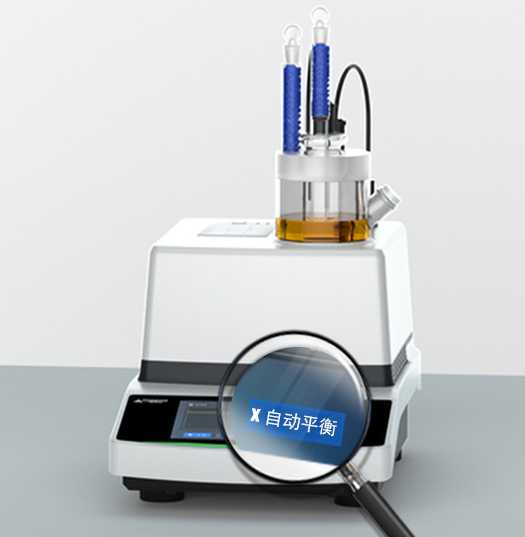
1. Inject Karl Fischer reagent into the sample cell, then inject about 100 microliters of distilled water and wait for the reagent to condition.
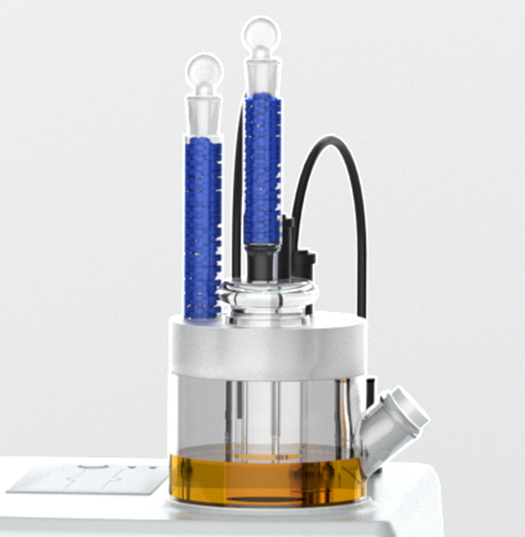
2. After clicking Start Measurement, draw the sample with the syringe, place it on the analytical balance, and press Tare.
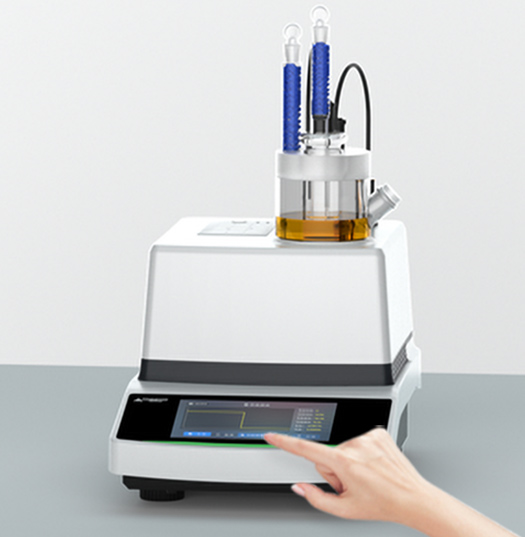
3. Inject the sample into the sample cell, weigh the syringe again, enter the balance reading into the instrument, and wait for the automatic test result.

Typical Industries:Pharmaceuticals
Typical Applications:Moisture content testing of chemical drugs, APIs, freeze-dried powders, capsules, solvents, pharmaceutical powders, pharmaceutical intermediates, etc.

Typical Industries:Food
Typical Applications:Moisture content testing of edible oils, dairy products, seasonings, puffed foods, pet foods, etc.

Typical Industries:Lithium Battery
Typical Applications:Moisture testing of cathode materials and precursors, anode materials, electrolytes, separators, electrode sheets, and slurries

Typical Industries:Chemicals, Rubber & Plastics
Typical Applications:Moisture determination of rubber, plastics, basic chemicals, coatings & dyes, polymer plastics, petroleum products, etc.
As can be seen from the table below, the Karl Fischer moisture analyzer is suitable for determining water content in many inorganic and organic compounds. Due to differences in compound properties, samples are divided into those that can be measured directly and those that cannot. Therefore, when determining water in a compound, operators should first consider which category it belongs to. If it is the latter (a sample that cannot be measured directly) and direct measurement is used anyway, large measurement errors will result or measurement will be impossible. To determine water in compounds that cannot be measured directly, appropriate methods must be used to eliminate various interferences — such as using different reagents or a Karl Fischer oven — to achieve correct determination.
| Organic acid salts | Na(CH3)SO4、Ba(OOCCH3)2、K2C2O4、VO2(OOCCH3)2、Na2C2H4O6 |
| Inorganic acid salts | NH4 PO4、CaCl2、NaHSO4、Na2SO4、KF、NH4NO3、MgSO4、Na2SO4、KSCN、FeSO4、Al2(SO4)3·KSO4、CaHPO4、NaI、CaCO3、FeF3、VO2(NO3)2 |
| Acidic oxides | SiO2、Al2O3 |
| Inorganic acids and anhydrides | SO2、HI、HF、HNO3、HCN、H2SO4、HSO3、NH2 |
| Acids | Carboxylic acids, hydroxy acids, amino acids, sulfonic acids |
| Alcohols | Monohydric alcohols, polyhydric alcohols, phenols |
| Esters | Carboxylic esters, orthoesters, carbamate lactones, inorganic acid esters |
| Stable hydroxyl compounds | Sugars, formaldehyde, benzil, benzoin, dichloroacetaldehyde |
| Acetals | Ether formal, diethyl ether |
| Hydrocarbons | Saturated and unsaturated aliphatic and aromatic compounds |
| .Acid anhydrides and acyl halides | Acetic anhydride, benzoyl chloride |
| Halides | Halogenated alkanes |
| Peroxy compounds | Hydrogen peroxide, dialkyl peroxides |
| Nitrogen compounds | Amines, amides, nitriles |
| Sulfur compounds | Sulfides, thiocyanates, thioethers, xanthates, dithiocarbamates |
| Inorganic Compound Type | Nature of Interference |
| Metal hydroxides and oxides | React quantitatively with Fischer reagent |
| Carbonates and bicarbonates | Same as above |
| Lead acetate, basic ammonia | Incomplete reaction |
| .Boric acid and oxides | React with iodine |
| Chromic acid and dichromic acid | Non-quantitative reaction |
| Cobalt ammonia complexes | Same as above |
| Copper chlorides and sulfates | Quantitatively reduced by HI |
| Ferric chloride | React quantitatively with Fischer reagent |
| Hydrogen sulfide and sodium sulfide | Uncertain reaction |
| Hydroxylamine | Partially react with Fischer reagent |
| Phosphomolybdic acid | Incomplete reaction |
| Methylsilanol (R3SiOH) | React quantitatively with Fischer reagent |
| Thiosulfates | Same as above |
| Tin dichloride | Same as above |
| Zirconyl chloride | Incomplete reaction |
| Organic Compound Type | Nature of Interference |
| Active carbonyl compounds | Form acetals |
| Peroxy compounds | React with SO2 in the reagent |
| Ascorbic acid | Quantitatively oxidized by iodine |
| Thiols | Same as above |
| Quinones | Quantitatively reduced by HI |
| Diacyl peroxides | Reduced by HI |
| DimethyloLnred | Condensation |
Related Content
Related Products
Recently Viewed Products




Copyright © Jiangsu Victor Instrument Meter Co., Ltd. All rights reserved | Sitemap | Technical Support: VicoMeter Operations Center