What Is the Difference Between Coulometric and Volumetric Karl Fischer Titration?
The biggest difference between the volumetric and coulometric methods is that I2differ in their source: in the volumetric method, I2comes from the titrant reagent, while in the coulometric method, I2is produced by electrolyzing an electrolyte containing I-is generated by electrolysis of the electrolyte.

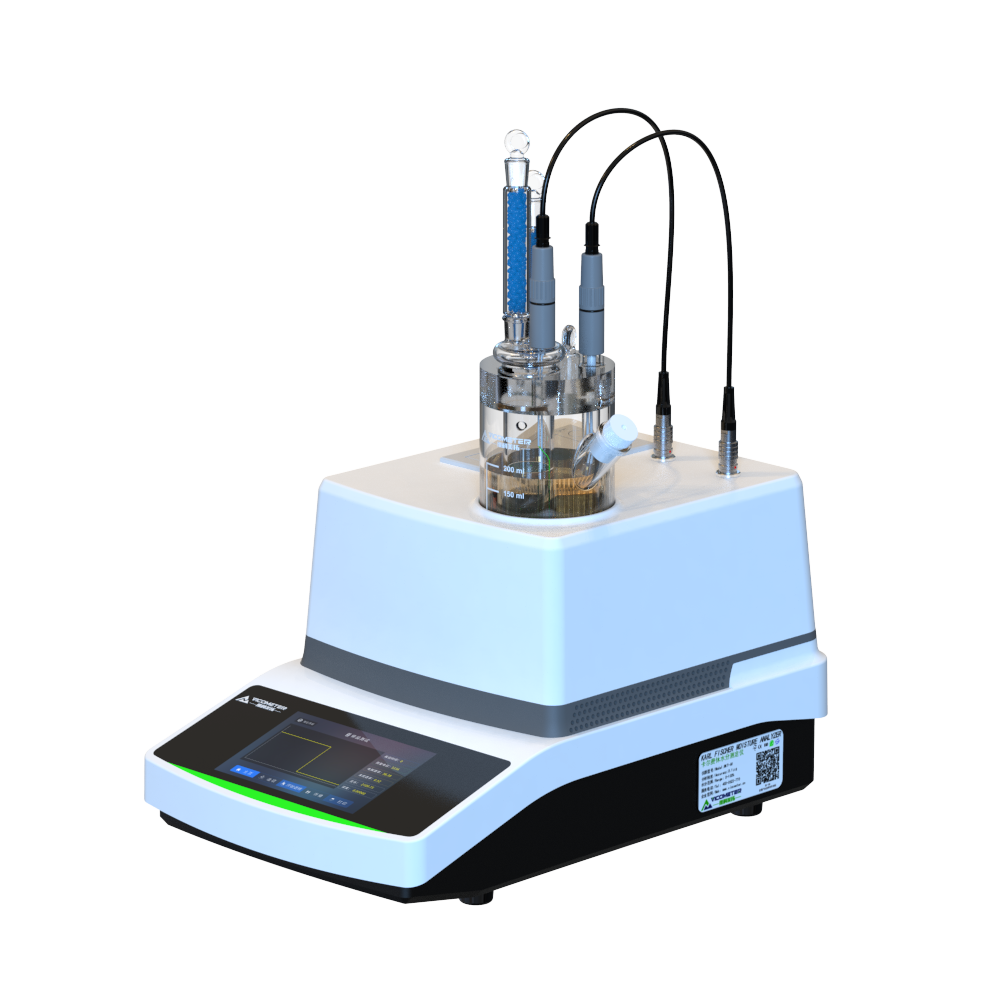
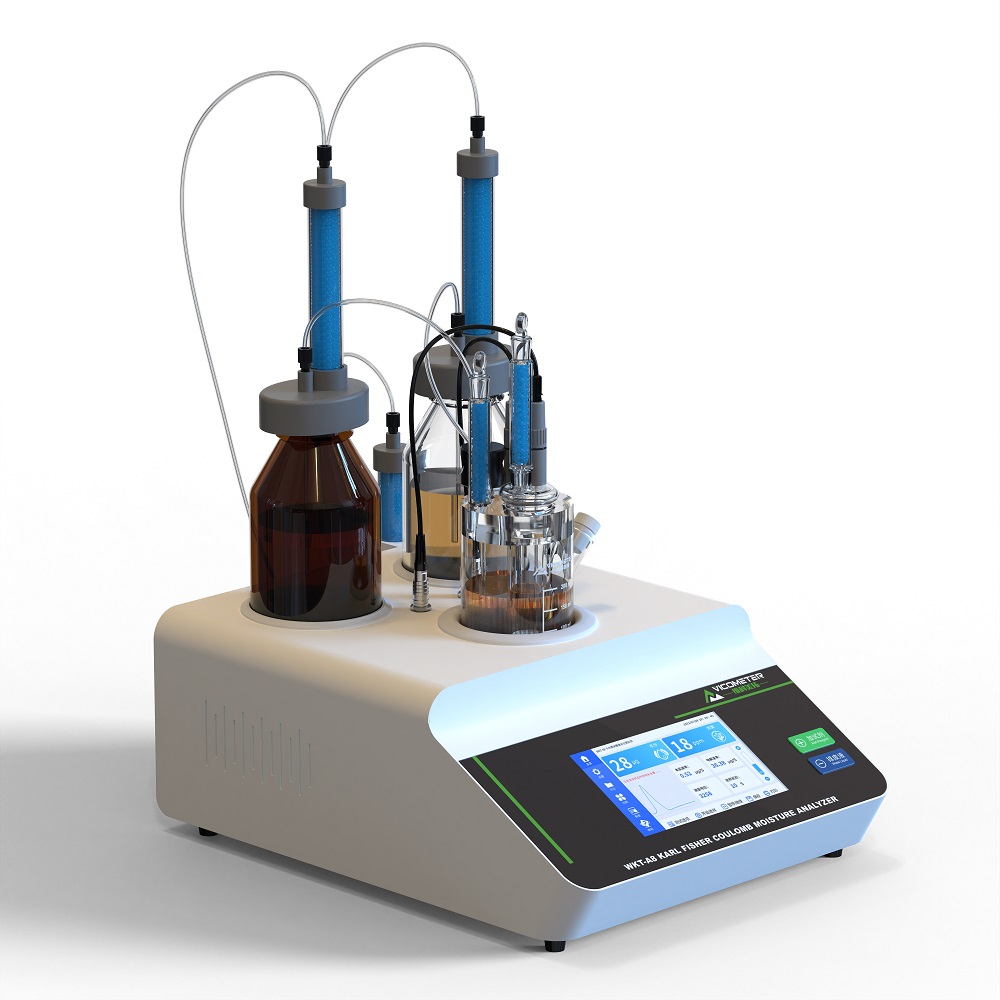
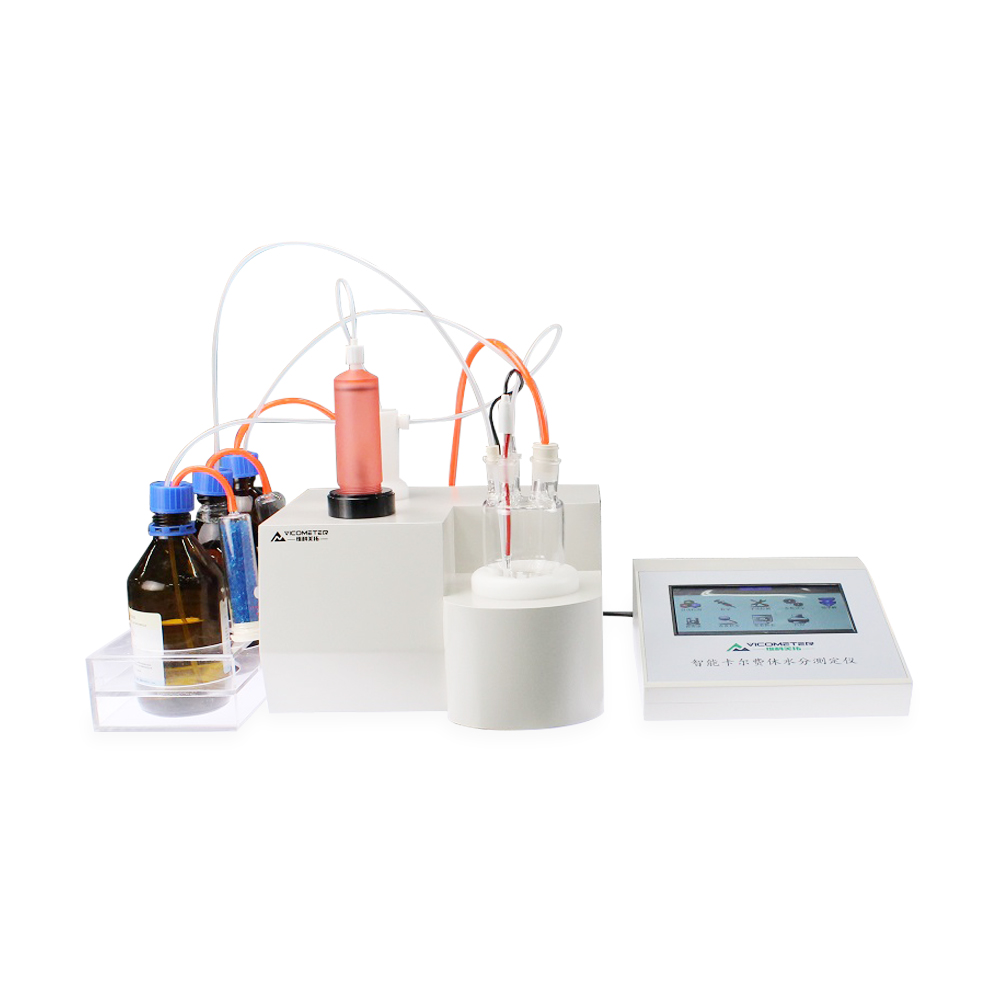
WKT-A9 Karl Fischer Trace Moisture Analyzer Coulometric
The Karl Fischer method, abbreviated as the Fischer method, is a volumetric analysis method for determining moisture proposed by Karl Fischer in 1935. Among all chemical methods for determining moisture in substances, it is the most specific and accurate for water. Improved in recent years with greater accuracy and an expanded measuring range, it has been adopted as the standard method for moisture determination in many substances.
The Fischer method has two variants: titration (volumetric) and coulometric. It is suitable for determining water content in many inorganic and organic compounds and is a world-recognized classic method for determining moisture content. It can quickly determine moisture in liquids, solids, and gases; it is the most specific and accurate chemical method and a universally used industry-standard analysis method. It is widely applied in the petroleum, chemical, power, pharmaceutical, food, testing, and pesticide industries, as well as in universities and scientific research.

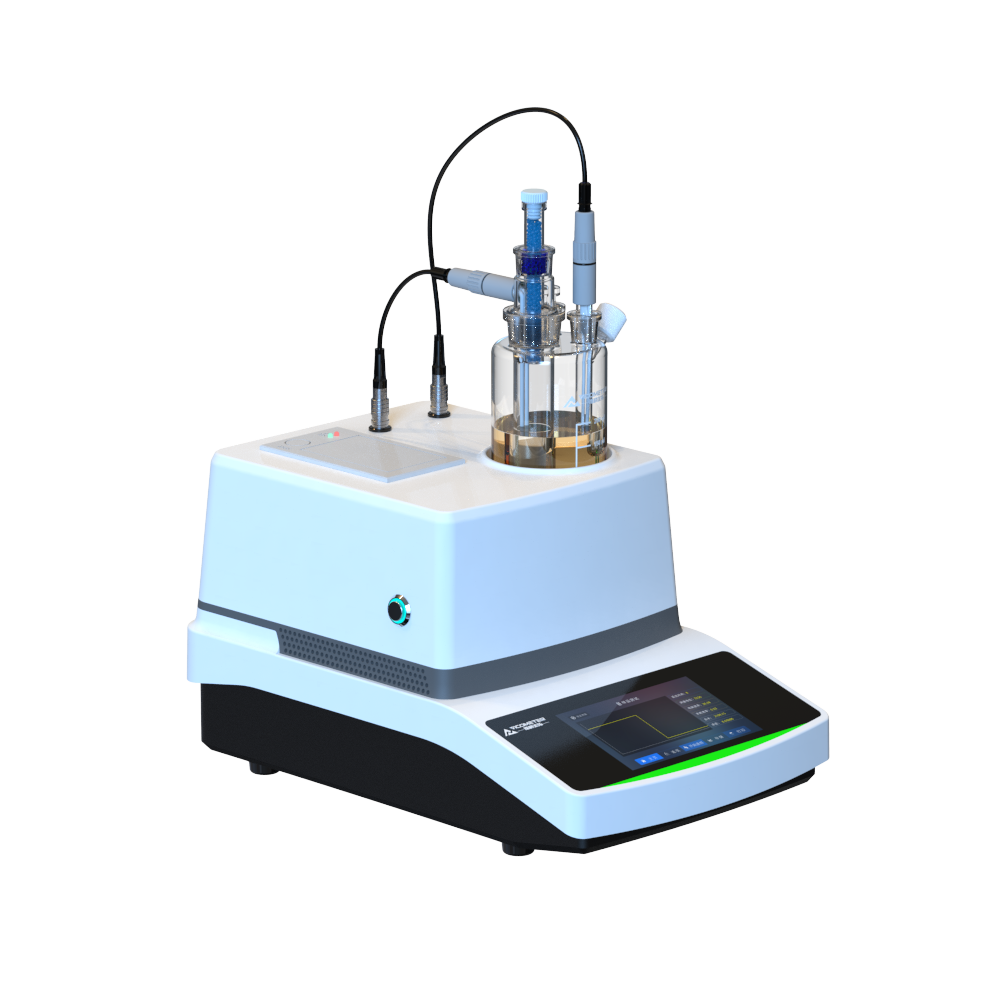
WKT-C9 Karl Fischer Moisture Titrator Volumetric
The principle of Karl Fischer titration involves two reaction steps, as shown below:
(1) CH3OH + SO2 + RN → [RNH]SO3CH3 (RN = organic base)
(2) H2O + I2 + [RNH]SO3CH3 + 2RN → [RNH]SO4CH3 + 2[RNH]I (RN = organic base)
During the reaction, iodine and water are consumed in a 1:1 molar ratio; by measuring the amount of iodine consumed, the water content in the sample can be calculated.
Karl Fischer moisture determination is an electrochemical method that can be divided intovolumetricandcoulometrictwo types.
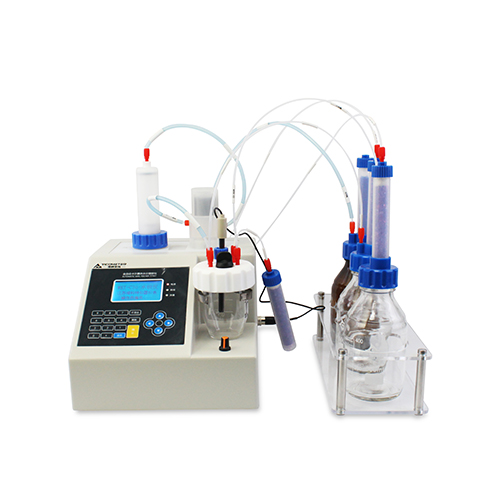
WKT-C30 Karl Fischer Moisture Analyzer (Volumetric)
When the volumetric method determines moisture content, it is mainly based on the electrochemical reaction:
Anode: 2I- - 2e → I2 ; Cathode: I2 + 2e → 2I-; 2H+ + 2e → H2↑
When both I2and I-are present in the reaction cell, the above reactions proceed simultaneously at both electrodes — I2is reduced at the positive electrode and I-is oxidized at the negative electrode; therefore, current flows between the two electrodes. If only I-is present in the solution, without I2, no current flows between the two electrodes.
Karl Fischer reagent contains active components such as iodine and an organic base (e.g., pyridine). When metered into the reaction cell, it undergoes the above reactions (1) and (2) with the water in the sample.
As the reaction proceeds, water is continuously consumed and I-is generated until the titration endpoint, when all water is consumed. At this point, a trace of unreacted Karl Fischer reagent remains in the solution, with I2and I-coexisting; current begins to flow between the two electrodes, indicating the endpoint, and titration stops. The moisture content of the sample is determined by metering the volume of Karl Fischer reagent consumed.
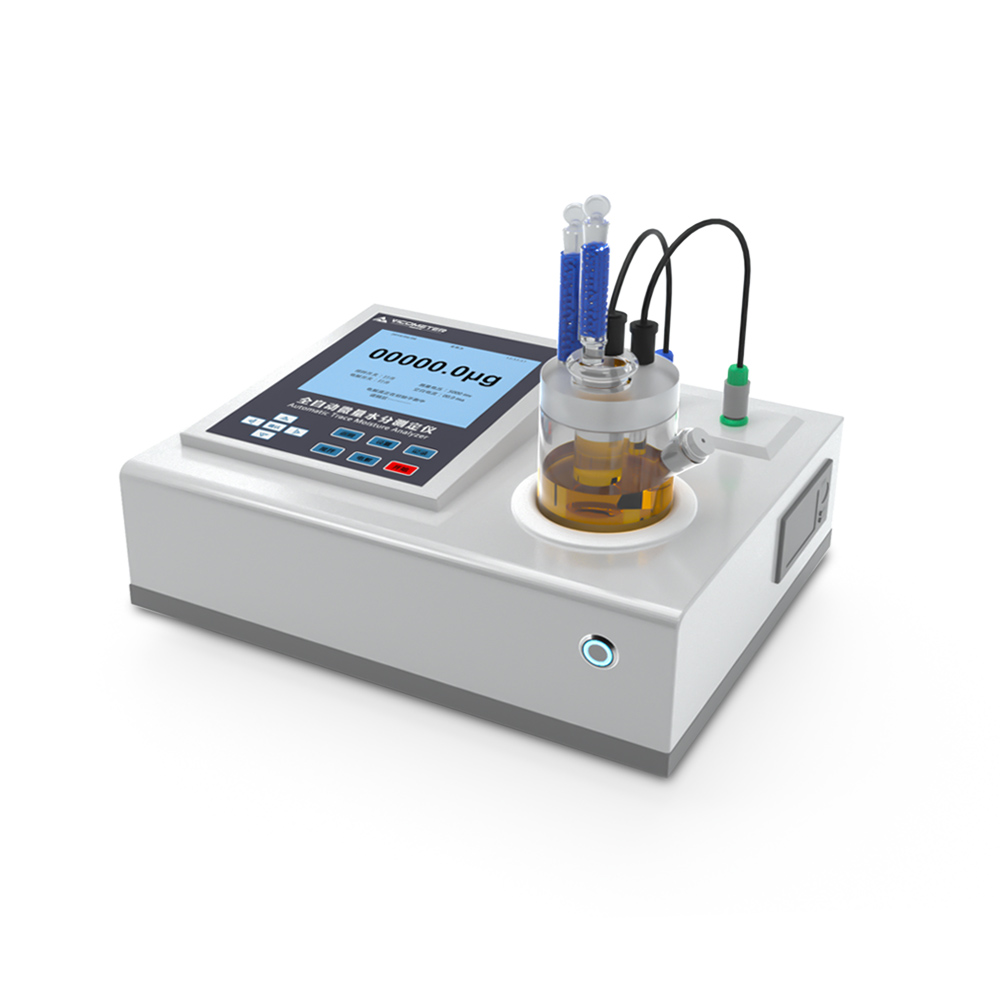
WKT-A9Pro Karl Fischer Trace Moisture Analyzer (Coulometric)
In the coulometric method (also called the electrometric method), the sample is dissolved in an electrolyte containing a special iodine-based solvent; the water in the sample reacts with and consumes iodine. However, the required iodine is no longer a standardized iodine reagent, but is generated by anodic oxidation of I- in the solution. The generated iodine reacts with the water in the sample and is consumed, then regenerated by electrolysis. When all water has reacted and the iodine concentration in the electrolyte returns to the preset level (excess generated iodine causes a potential change), electrolysis stops. The moisture content of the sample is then calculated according to Faraday's law of electrolysis.
The biggest difference between the volumetric and coulometric methods is that I2differ in their source: in the volumetric method, I2comes from the titrant reagent, while in the coulometric method, I2is produced by electrolyzing an electrolyte containing I-is generated by electrolysis of the electrolyte.
In the coulometric method, the quantitative relationship between the electric quantity of the electrolytic cell and the generated iodine is strict, so the coulometric method offers higher measurement accuracy. At the same time, due to its limited electrolysis speed, when the sample moisture content is low, the Karl Fischer coulometric method not only provides fast detection but also good data parallelism.
Generally speaking, when the sample moisture content is <1000 ppm, the coulometric method is ideal; when the moisture content is ≥1000 ppm, the volumetric method is more suitable.
The organic base serves to neutralize the acidic substance (alkyl sulfurous acid) produced during titration, ensuring the system proceeds within a suitable pH range. Research has found that pyridine is not the most suitable base. Being weakly basic, it cannot completely neutralize the acidic intermediates, resulting in a slower, incomplete overall reaction and poor repeatability of results. In addition, pyridine emits an unpleasant odor. As the method has evolved, pyridine has gradually been replaced by more suitable bases (such as imidazoles).
Since the coulometric method determines moisture by calculating the electricity consumed in electrolyzing iodine, the sample must not undergo the following side reactions: a) reacting with Karl Fischer reagent to generate water; b) consuming iodine or releasing iodine in the detection cell. Consequently, certain samples — such as iron salts, nitrites, ketone salts, oxides, hydroxides, aldehydes, ketones, metal peroxides, strong oxidizing agents, strong acids, and boron-containing compounds — cannot be tested by the coulometric method.
Related Content
Related Products
Recently Viewed Products




Copyright © Jiangsu Victor Instrument Meter Co., Ltd. All rights reserved | Sitemap | Technical Support: VicoMeter Operations Center