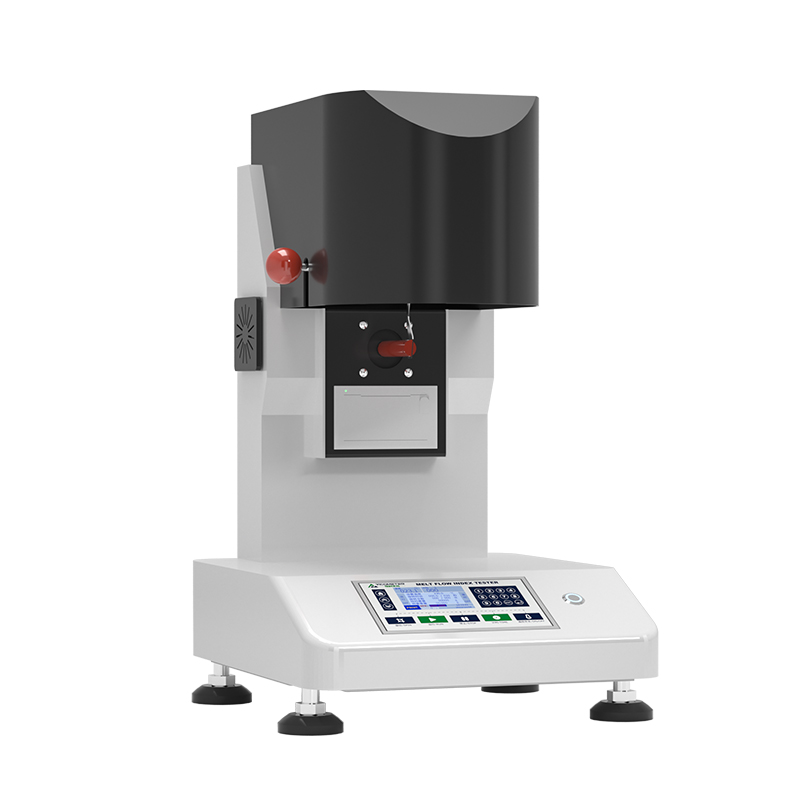
Melt Flow Indexer
The melt flow indexer is also called a melt flow rate tester, melt index tester, melt index meter, or melt flow index tester. Melt flow rate refers to the extrusion rate of a melt through a standard die of specified length and inner diameter under specified conditions of temperature, load, and piston position.
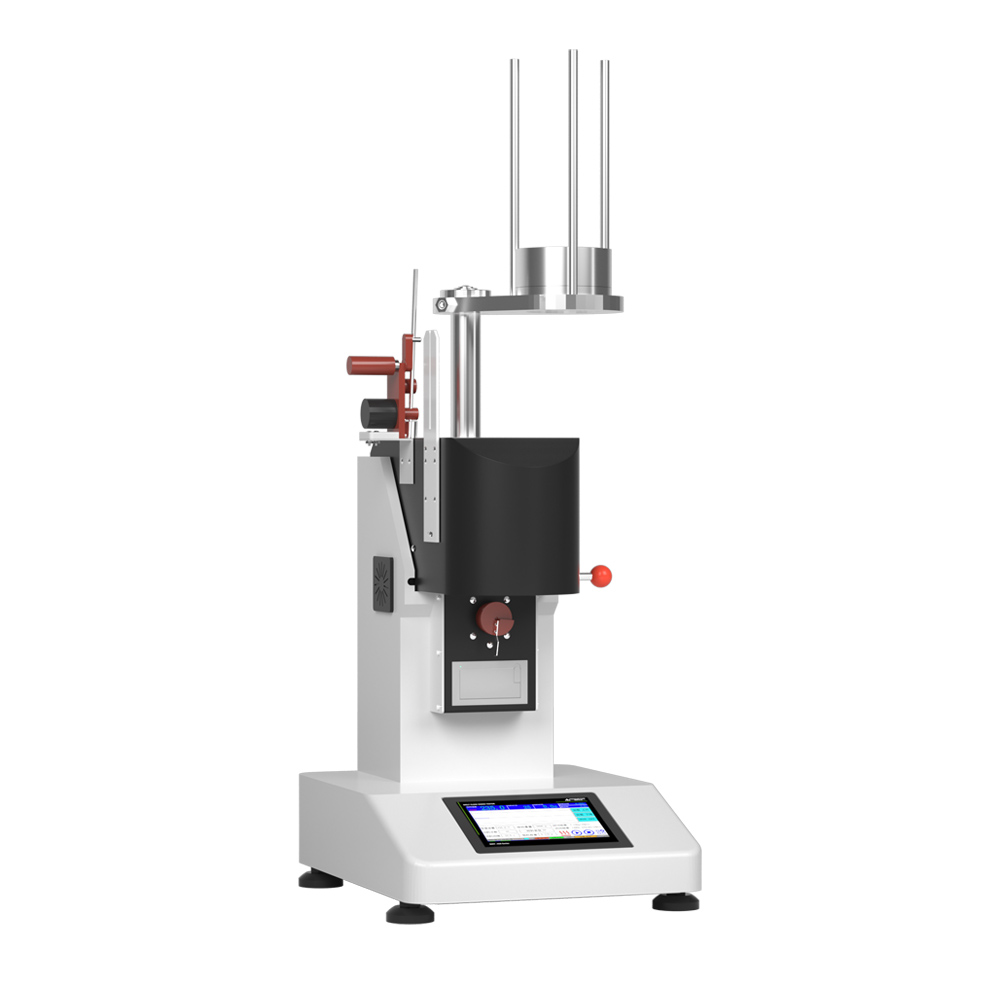
Melt Flow Indexer
(Click image to enlarge)
The melt flow indexer is also called a melt flow rate tester, melt indexer, melt index tester, melt flow index tester, etc.
Melt flow rate is the extrusion rate of a melt through a standard die of specified length and inner diameter under specified conditions of temperature, load, and piston position. The mass extruded in a specified time is the melt mass-flow rate (MFR), in grams per 10 minutes (g/10 min); the volume extruded in a specified time is the melt volume-flow rate (MVR), in cubic centimeters per 10 minutes (cm³/10 min). Melt flow rate characterizes the viscous flow behavior of thermoplastics in the molten state.
According to different testing principles, melt flow rate testers can be divided into mass method (MFR) melt flow indexers and volume method (MVR) melt flow indexers; in instrument design, both methods can be integrated into one device.
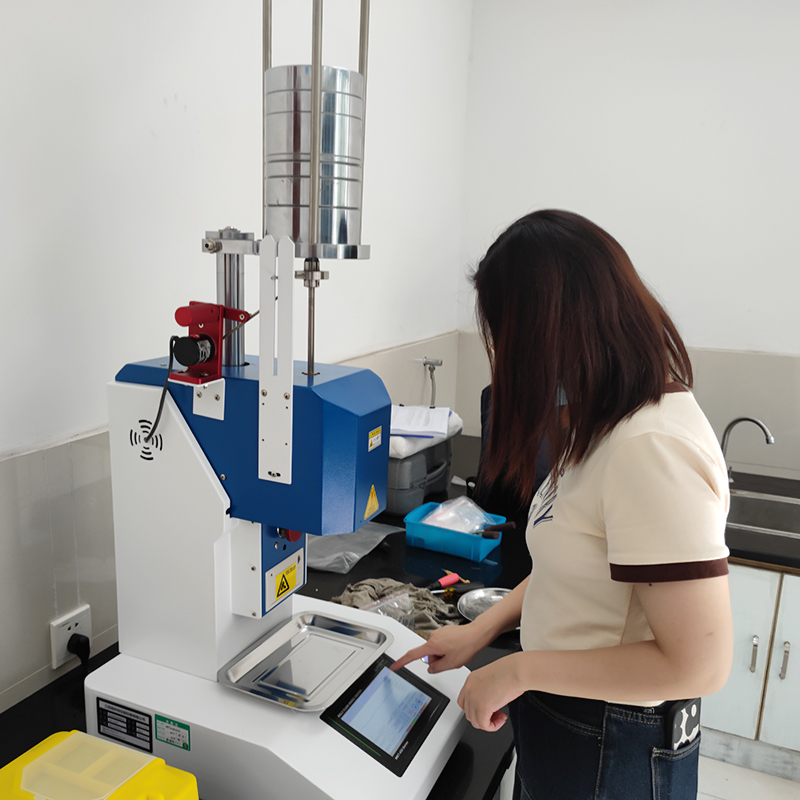
Melt Flow IndexerOn-site Training
(Click image to enlarge)
Definition: Melt flow rate is the extrusion rate of a melt through a standard die of specified length and inner diameter under specified conditions of temperature, load, and piston position. The mass extruded in a specified time is the melt mass-flow rate (MFR), in grams per 10 minutes (g/10 min); the volume extruded in a specified time is the melt volume-flow rate (MVR), in cubic centimeters per 10 minutes (cm³/10 min).
Melt flow rate characterizes the viscous flow behavior of thermoplastics in the molten state, and has important guiding significance for ensuring the quality of thermoplastics and their products and for adjusting production processes. It applies both to engineering plastics with high melting temperatures such as polycarbonate, polyarylsulfone, fluoroplastics, and nylon, and to plastics with lower melting temperatures such as polyethylene (PE), polystyrene (PS), polypropylene (PP), ABS resin, polyoxymethylene (POM), and polycarbonate (PC) resin. It is widely used in plastics production, plastic products, petrochemicals and other industries, as well as related universities, research institutions, and commodity inspection departments.
The melt flow indexer is suitable for determining the melt mass-flow rate of thermoplastics as specified in the national standard GB/T 3682-2000 "Determination of the melt mass-flow rate (MFR) and melt volume-flow rate (MVR) of thermoplastics." This standard is identical to ISO 1133:1997, and the instrument also meets the ASTM D1238 test standard.
Melt mass-flow rate and melt volume-flow rate have been clearly specified in ISO standards, and China's standards will be revised accordingly. In import and export business, the determination of melt volume-flow rate will soon be applied.
WKT-450D Motorized Loading Melt Indexer
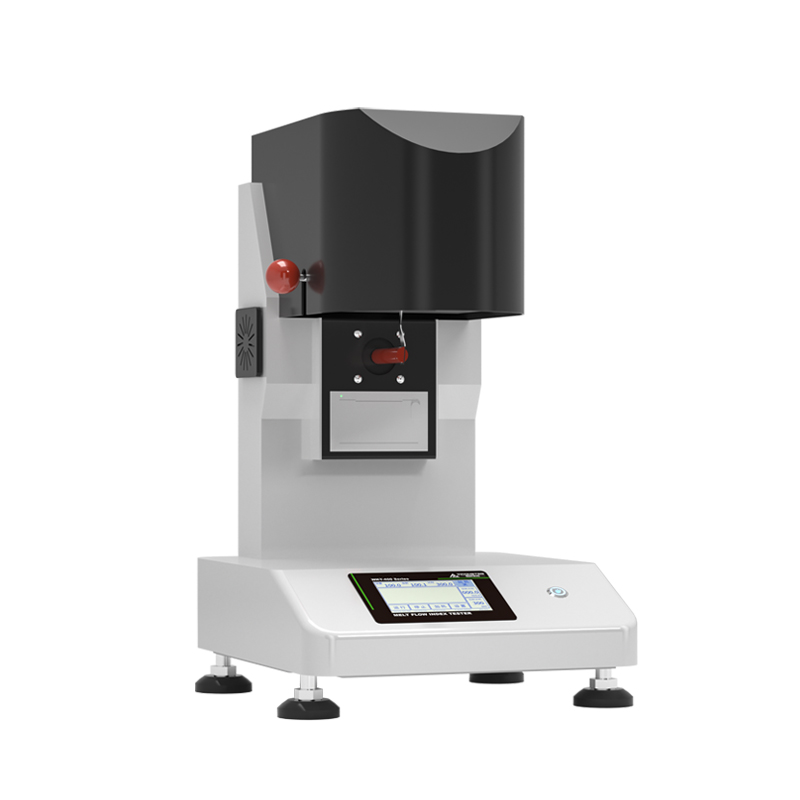
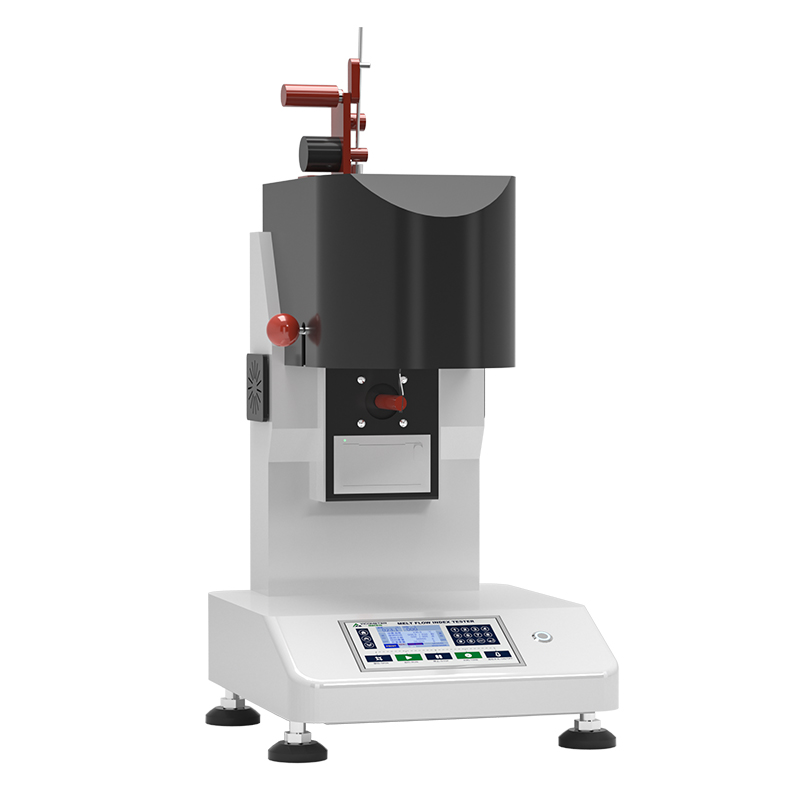
The melt flow indexer mainly consists of a heating furnace, temperature control module, intelligent control, human-machine interface, load weights, printer, and other parts.
The lower part of the instrument is the temperature control system, which adopts intelligent PID temperature control technology with strong anti-interference ability and high control accuracy, automatically controlling the temperature inside the main barrel within the set range, with temperature fluctuation maintained within ±0.2°C to ensure test stability. The upper part is the heating furnace; its barrel heater consists of two sets of heating elements — one set supplies the heat required to bring the barrel to the set temperature with continuous current supply, while the other maintains the barrel temperature within the fluctuation range. Different manufacturers use different heating methods, such as heating jackets or heating rods, but regardless of the method, precise temperature control must be achieved to meet standard requirements. The human-machine interface allows setting of test temperature, cutting count, cutting interval, material type, material weighing, etc. The mass load of the weights acts on the molten sample in the barrel via the piston rod, pressing the melt out of the capillary. During testing, extruded melt strands are cut at regular intervals and weighed to obtain the sample's melt index; the printer can print test results in real time or from query records.

Melt Flow IndexerOn-site Training
(Click image to enlarge)
1. On the instrument's test parameter setting interface, set the constant temperature point, sampling interval, sampling count, and load according to the corresponding national standard; start temperature control and wait for the temperature to stabilize.
2. After the temperature stabilizes, pull out the piston rod, load the material, and compact it (should be completed within 1 min); reinsert the piston rod, and after 4 minutes, apply the test load specified by the standard to the piston.
3. Cut the sample, selecting automatic or manual cutting;
4. Weigh the cut extrudates (generally select 3-5 bubble-free strands; after cooling, place them on a balance, weigh each, and take the average); enter the weight into the instrument to display the result.
5. After the test, perform post-test handling according to the relevant information in the operating guide to maintain the instrument's long-term stable performance.
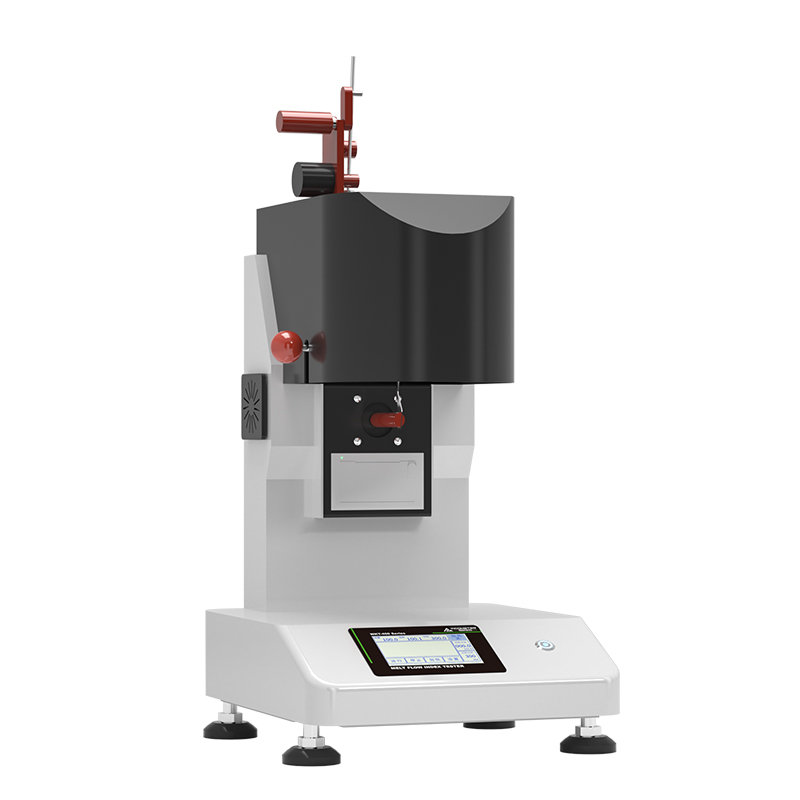
WKT-400TC Touchscreen Melt Flow Indexer
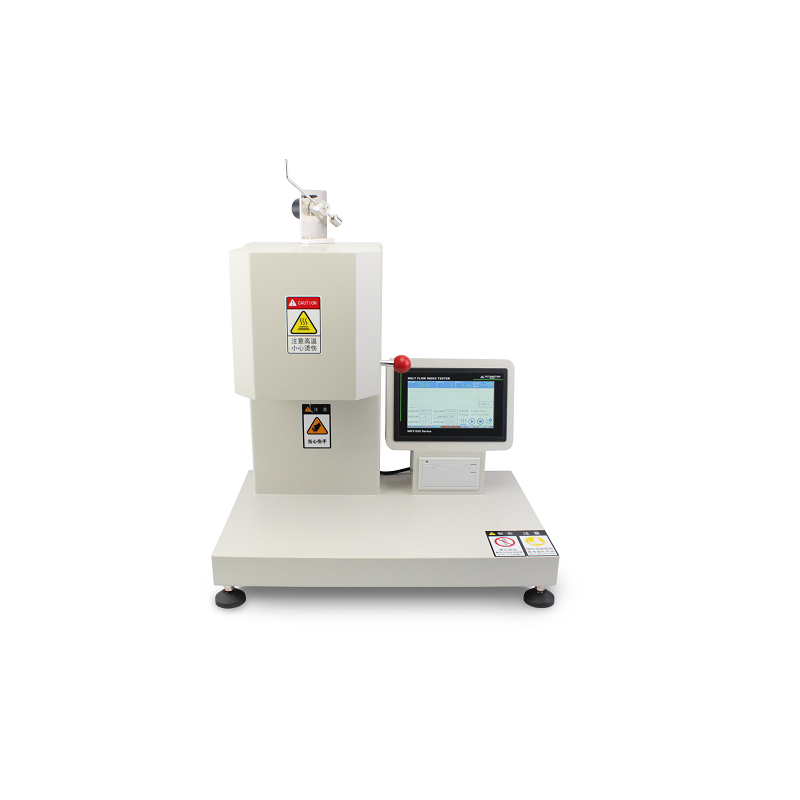
A standard melt flow indexer is a basic instrument that meets the fundamental test requirements for melt index and complies with relevant national standards. These basic requirements include: a precise temperature control system; support for both mass method (MFR) and volume method (MVR) test methods; and an over-temperature protection device. In addition, it should have common basic functions such as printing, integrated manual/automatic cutting, data storage, and automatic result analysis.
According to user operation preferences and system maturity, they are generally divided into touchscreen melt flow indexers and push-button melt flow indexers.
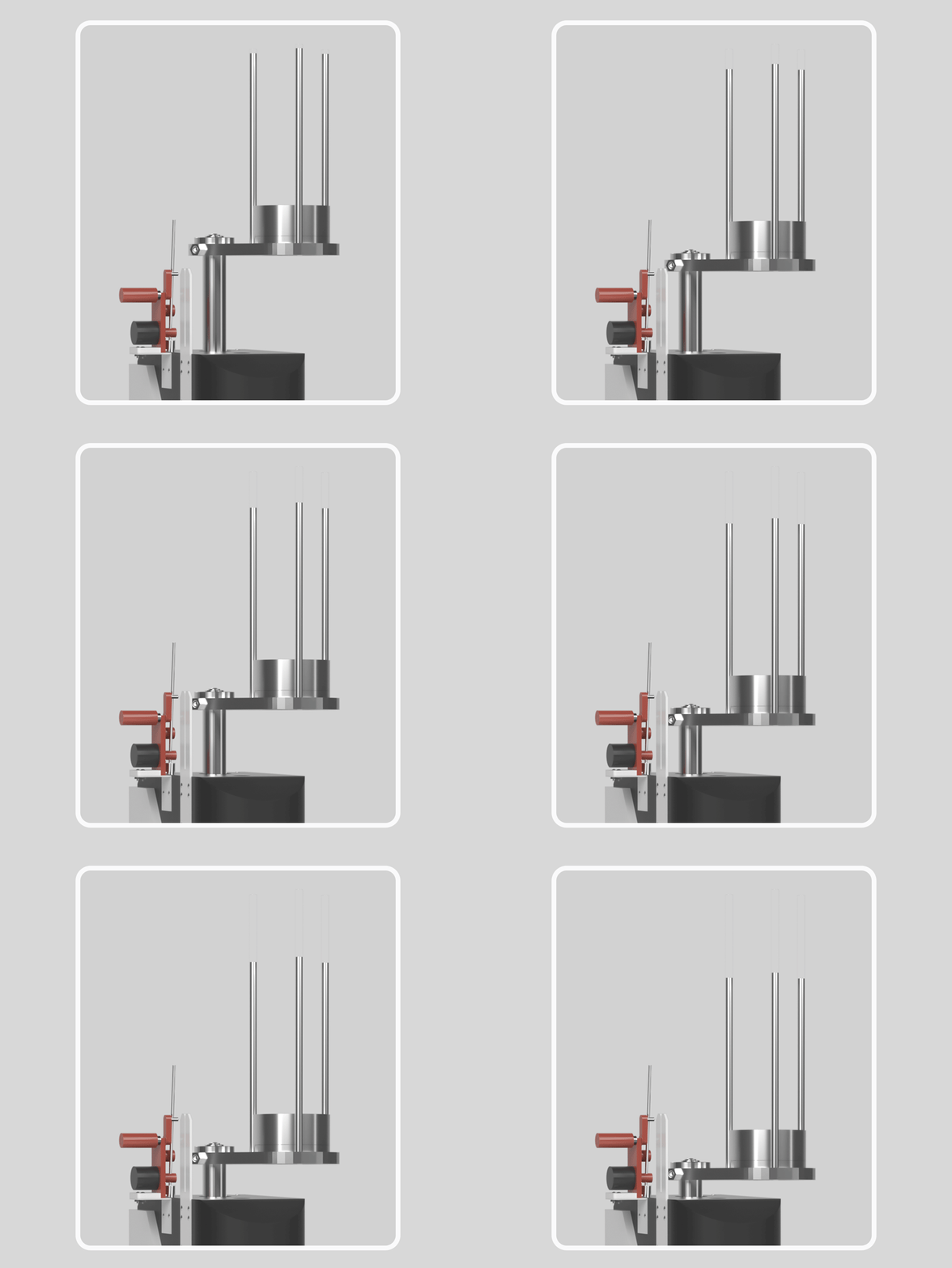
Motorized Loading Melt Flow Indexer
(Click image to enlarge)
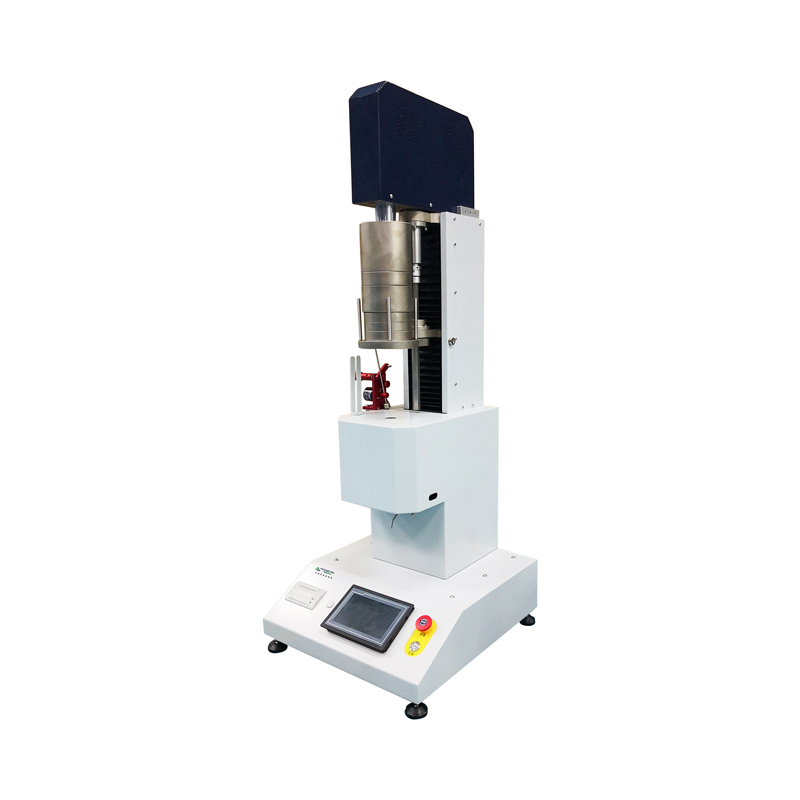
A motorized weight-loading melt flow indexer is an instrument that can automatically load weights. According to standards, when testing materials, weights weighing several kilograms must be placed on top of the instrument. Since an instrument on a workbench is generally above normal head height, operators repeatedly lifting weights overhead risk the weights slipping due to insufficient wrist strength. Against this background, motorized weight loading emerged: operators can place the weights on the weight support rack in advance, and with one-touch start during testing, fully automatic weight loading is achieved without repeated manual handling. On top of the standard instrument, using a motorized loading melt flow indexer gives you the following experience:
One-touch start with motorized weight loading — no repeated manual weight loading, avoiding potential hazards.
Dedicated PC control software helps you build your own PC workstation and save unlimited data to your computer.
Optimized data processing system for more reasonable test results.
7-inch color touchscreen with a more reasonable and intuitive UI design for a better user experience.
More comprehensive raw test data.
| Material | Condition (Letter Code) | Test Temperature θ, °C | Nominal Load (Combination) mnom, kg |
| PS | H | 200 | 5.00tuy743 |
| PE | D | 190 | 2.16 |
| PE | E | 190 | 0.325 |
| PE | G | 190 | 21.60 |
| PE | T | 190 | 5.00 |
| PP | M | 230 | 2.16 |
| PP | 230 | 5.00 | |
| ABS | U | 220 | 10.00 |
| ABS | 240 | 10.00 | |
| ABS | 265 | 10.00 | |
| PS—1 | H | 200 | 5.00 |
| E/VAC | B | 150 | 2.16 |
| E/VAC | D | 190 | 2.16 |
| E/VAC | Z | 125 | 0.325 |
| SAN | U | 220 | 10.00 |
| ASA、ACS、AEDPS | U | 220 | 10.00 |
| ASA、AEDPS | 240 | 10.00 | |
| ASA、AEDPS | 265 | 10.00 | |
| PC | W | 300 | 1.20 |
| PMMA | N | 230 | 3.80 |
| PB | D | 190 | 2.16 |
| PB | F | 190 | 10.00 |
| PB | T | 190 | 5.00 |
| POM | D | 190 | 2.16 |
| PP | T | 190 | 5.00 |
| MABS | U | 220 | 10.00 |
| Test Load | Combination |
| Level 1 | 0.325kg = (Piston Rod + Weight Tray + Insulating Sleeve + No.1 Weight) = 3.187N |
| Level 2 | 1.200kg = (0.325 + No.2 0.875 Weight) = 11.77N |
| Level 3 | 2.160kg = (0.325 + No.3 1.835 Weight) = 21.18N |
| Level 4 | 3.800kg = (0.325 + No.4 3.475 Weight) = 37.26N |
| Level 5 | 5.000kg = (0.325 + No.5 4.675 Weight) = 49.03N |
| Level 6 | 10.000kg = (0.325 + No.5 4.675 Weight + No.6 5.000 Weight) = 98.07N |
| Level 7 | 12.000kg = (0.325 + No.5 4.675 Weight + No.6 5.000 + No.7 2.500 Weight) = 122.58N |
| Level 8 | 21.600kg = (0.325 + No.2 0.875 + No.3 1.835 + No.4 3.475 + No.5 4.675 + No.6 5.000 + No.7 2.500 + No.8 2.915 Weights) = 211.82N |
Related Products
Recently Viewed Products




Copyright © Jiangsu Victor Instrument Meter Co., Ltd. All rights reserved | Sitemap | Technical Support: VicoMeter Operations Center